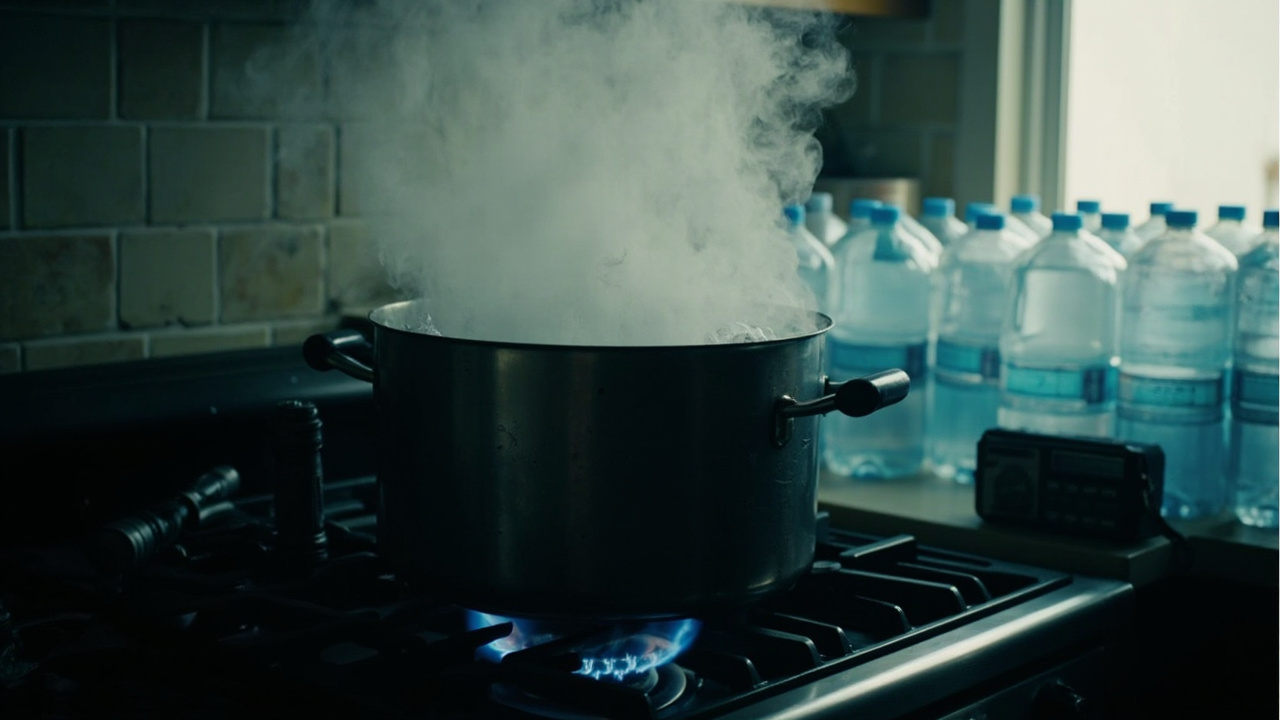
TL;DR: New Jersey American Water issued a mandatory boil-water advisory on September 28, 2026, for customers in Franklin Township, Mansfield Township, Washington Borough and Washington Township in Warren County after a water-main break near North Lincoln Avenue and West Church Street caused a loss of pressure.
What was ordered on September 28
New Jersey American Water issued a mandatory boil-water advisory on Sunday night for customers in four Warren County communities, according to WRNJ Radio. The affected communities are Franklin Township, Mansfield Township, Washington Borough and Washington Township, according to WFMZ.com.
The company listing identifies the affected system as PWSID NJ2121001, according to New Jersey American Water Alerts. The Alerts page posted the notice on 09/28/2026, according to New Jersey American Water Alerts.
The advisory was effective immediately and remains in effect until further notice, according to WFMZ.com. Customers were instructed to bring tap water to a rolling boil for one minute, let it cool and use it, or use bottled water, according to WFMZ.com.
Where the break happened
The break occurred near the intersection of N. Lincoln Ave. and W. Church St. in Washington Borough, according to WFMZ.com. WRNJ Radio described the location as North Lincoln Avenue and West Church Street in Washington Borough.
The utility said the main has been isolated, according to WRNJ Radio. Crews are working to make repairs, according to WRNJ Radio. WFMZ.com reported that crews are working to repair the main as quickly and safely as possible.
New Jersey American Water said the loss of pressure created a potential threat to water quality, according to WRNJ Radio. The advisory was issued as a precaution and will remain in effect until repairs are completed and testing determines the water is safe, according to WRNJ Radio.
Why pressure loss triggers a boil order
The company said it is implementing the advisory until tests show the water supply is satisfactory because there may be a threat to water quality in the affected area, according to WFMZ.com. Loss of pressure from the main break was identified as the reason for the precaution, according to New Jersey American Water Alerts.
Residents should continue to boil their water or use bottled water until they are notified that water quality is satisfactory, according to WFMZ.com. The advisory will remain in effect until the main is repaired and testing shows the water is safe, according to WFMZ.com.
Boiling kills bacteria and other organisms, the company says, according to WFMZ.com. Customers should continue boiling water or using bottled water until New Jersey American Water announces that testing has confirmed the water quality is satisfactory, according to WRNJ Radio.
How to boil and use water safely
Customers in the affected areas should bring tap water to a rolling boil for one minute and allow it to cool before use or use bottled water, according to WRNJ Radio. That boiled or bottled water should be used for drinking, preparing food, mixing baby formula and other beverages, washing fruits and vegetables, cooking, making ice, brushing teeth and washing dishes, according to WRNJ Radio.
WFMZ.com listed the same uses in detail: boiled or bottled water should be used for drinking; preparing food; mixing baby formula, food or drinks; washing fruits and vegetables; cooking; making ice; brushing teeth; and washing dishes until further notice.
Store boiled water in the refrigerator for drinking, according to WFMZ.com. After boiling water for drinking, store two to three gallons of cooled, boiled water in one-gallon containers in the refrigerator for use in cooking and drinking, according to WFMZ.com. Store for two to three days, according to WFMZ.com.
Food, ice and baby formula steps
Customers should discard uncooked food, beverages or ice made with tap water during the day the advisory was issued, according to WRNJ Radio. WFMZ.com likewise recommends discarding uncooked food, beverages or ice made with tap water during the advisory.
Boiled or bottled water should be used for preparing food, according to WRNJ Radio. Boiled or bottled water should be used for mixing baby formula and other beverages, according to WRNJ Radio.
WFMZ.com specifies that boiled or bottled water should be used for mixing baby formula, food or drinks. WFMZ.com also specifies that boiled or bottled water should be used for washing fruits and vegetables and for cooking.
Households preparing for an extended advisory can rotate stored boiled water on the schedule described by the company, according to WFMZ.com. The company guidance calls for one-gallon containers in the refrigerator and storage for two to three days, according to WFMZ.com.
Bathing, showering and minor injuries
Customers should avoid swallowing water while showering or bathing, according to WRNJ Radio. WFMZ.com repeats that residents should avoid swallowing water while showering or bathing.
Use only boiled, cooled water to treat minor injuries, according to WFMZ.com. That instruction gives households a clear rule for first-aid water during the advisory period, according to WFMZ.com.
The advisory does not tell residents to stop bathing, but it directs them to avoid swallowing tap water during bathing and showering, according to WFMZ.com. For drinking, cooking and oral hygiene, the stated alternative is boiled water that has cooled or bottled water, according to WRNJ Radio.
Pets and home filters
Pets should be given boiled and cooled water or bottled water, according to WRNJ Radio. WFMZ.com directs residents to give pets boiled, cooled water as directed for household use.
The utility said home water filters should not be used as a substitute for boiling water because most do not provide adequate protection from microorganisms, according to WRNJ Radio. WFMZ.com states the same precaution: do not rely on home water filters in place of boiling or bottled water because most household filters will not protect against microorganisms.
For preparedness planning, that means pitcher filters, faucet filters and refrigerator filters in the four townships should not be treated as a workaround while the advisory is active, according to WFMZ.com. The company-approved options stated for the advisory are rolling boil for one minute followed by cooling, or bottled water, according to WFMZ.com.
Dishes and kitchen sanitation
WFMZ.com recommends rinsing hand-washed dishes with a diluted bleach solution of one tablespoon household bleach per gallon of tap water. As an alternative, wash dishes in a dishwasher using the hot wash and dry cycles, according to WFMZ.com.
Boiled or bottled water should be used for washing dishes, according to WRNJ Radio. The bleach-rinse ratio and dishwasher setting provide the company-stated methods for finishing dish sanitation during the advisory, according to WFMZ.com.
Households without a dishwasher can follow the hand-wash bleach-rinse measurement exactly as stated, according to WFMZ.com. Households with a dishwasher can use the hot wash and dry cycles described by the company, according to WFMZ.com.
How updates and help are delivered
Updates will be provided through the company’s emergency notification system and website, according to WRNJ Radio. Updates will be sent via the company's emergency notification system and posted at newjerseyamwater.com/alerts under “View Active Advisory List,” according to WFMZ.com.
Customers with questions can contact New Jersey American Water at 800-272-1325, according to WRNJ Radio. WFMZ.com lists the Customer Service Center number as 1-800-272-1325.
The Alerts page also provides a phone contact of 1-800-272-1325 and states to call 24/7 for any emergency, according to New Jersey American Water Alerts. For non-emergencies, the listed hours are Monday through Friday from 7 a.m. to 7 p.m., according to New Jersey American Water Alerts.
What to keep ready while the advisory lasts
Keep bottled water available for drinking, food preparation and brushing teeth while the advisory remains in place, according to WRNJ Radio. Keep a rolling-boil capability available for tap water intended for drinking, preparing food, mixing baby formula and other beverages, washing fruits and vegetables, cooking, making ice, brushing teeth and washing dishes, according to WRNJ Radio.
Keep one-gallon containers available for refrigerated storage of cooled, boiled water, according to WFMZ.com. The company describes storing two to three gallons for use in cooking and drinking and storing for two to three days, according to WFMZ.com.
Keep pets on boiled, cooled water or bottled water, according to WRNJ Radio. Keep household bleach and a measuring tablespoon accessible if hand-washing dishes with the diluted bleach rinse described by the company, according to WFMZ.com.
Sources referenced
- New Jersey American Water customers in 4 Warren County communities under boil water advisory - WRNJ Radio (https://wrnjradio.com/new-jersey-american-water-customers-in-4-warren-county-communities-under-boil-water-advisory/)