TL;DR: FEMA's Are You Ready? An In-Depth Guide to Citizen Preparedness organizes household readiness into three actions — know your risks, make a plan, and take action — with checklists for kits, communications, and recovery.
What the Federal Guide Covers
According to the Ready.gov collection page titled "Are You Ready? Guide," the publication is described as an in-depth guide to citizen preparedness and is offered in several languages. The collection page shows a last update date of 06/21/2022.
According to the PDF copy of Are You Ready? An In-Depth Guide to Citizen Preparedness, the edition is identified as P-2064 | September 2020 and credits FEMA ICPD. The same document states that the guide is available for free through the FEMA Publication Warehouse at 1-800-480-2520 when callers ask for publication P-2064, and that it is also available as a free download online at Ready.gov.
According to the Ready.gov page titled "Free Publications," the Federal Emergency Management Agency has made files for the Ready Campaign's publications available to the public to download at no cost so organizations can reproduce the materials to expand reach. That page states the publications were up to date as of Sept. 30, 2025 and would not be updated on a regular basis after that date.
The Three-Step Framework
According to the Are You Ready? PDF, households should prepare through three steps: 1) Know Your Risks; 2) Make a Plan; and 3) Take Action. The document presents those headings as the core sequence for family and community preparation.
According to the same PDF, the guide addresses general preparedness for before, during, and after disasters, plus best practices for specific hazards such as hurricanes, earthquakes, and active shooters. The table of contents lists sections titled Prepare for Disasters, Make a Plan, Take Action, and Recovering from a Disaster.
According to the Are You Ready? PDF, planning ahead is linked to staying safe, limiting property damage, knowing what to do during and after a disaster, better managing savings, supporting community preparedness, and helping a community resume operations after a disaster.
According to the Department of Homeland Security page titled "Prepare My Family for a Disaster," a family plan created in advance matters because members may not be together when a disaster strikes. That page says a plan should address how household members will get to a safe place, how they will contact each other, how they will get back together, and what they will do in different situations.
Know Your Risks Where You Live
According to the Are You Ready? PDF, most communities face many types of hazards, and households should learn the risks specific to the home and how to assess risks when away from home. The document directs readers to know how and when to take action before, during, and after different hazards.
According to the Ready.gov "Free Publications" page, hazard information sheets are offered for Active Shooter, Avalanche, Cyberattack, Earthquake, Extreme Heat, Financial Emergency, Flood, Hurricane, Landslide, Novel Pandemic, Power Outage, Thunderstorm, Lightning, and Hail, Tornado, Tsunami, Volcano, Wildfire, and Winter Storm. The page also offers a full-suite download and versions in additional languages for many of those hazards.
According to the Ready.gov page titled "2025 National Preparedness Month Toolkit," the 2025 theme was Preparedness Starts at Home. The toolkit page lists four requested actions: know the different types of emergencies that could happen and appropriate responses to stay safe, make a family emergency plan, build an emergency supply kit, and get involved in the community by taking action to prepare for emergencies.
According to that toolkit page, small household steps for home fires, power outages, and local floods leave a household more prepared for larger events such as wildfires, flash flooding, and hurricanes. The page also advises households to consider medical conditions, disabilities, pets, and neighbors who might need help getting prepared.
Make a Family Emergency Plan
According to the Ready.gov page titled "Make A Plan," families may not be together if a disaster strikes, so households should know which types of disasters could affect the area, know how members will contact one another and reconnect if separated, and establish a family meeting place that is familiar and easy to find. That page shows a last update date of 04/06/2026.
According to the same "Make A Plan" page, Step 1 asks households to discuss five questions: how emergency alerts and warnings will be received, what the shelter plan is, what the evacuation route is, what the family or household communication plan is, and whether the emergency preparedness kit needs updating.
According to the "Make A Plan" page, Step 2 asks households to tailor plans and supplies to daily living needs and responsibilities. Listed factors include different ages of household members, responsibilities for assisting others, locations frequented, dietary needs, medical needs including prescriptions and equipment, disabilities or access and functional needs including devices and equipment, languages spoken, cultural and religious considerations, pets or service animals, and households with school-aged children.
According to the "Make A Plan" page, Step 3 directs households to create a Family Emergency Plan with a fillable form, and Step 4 directs households to practice the plan with the family or household.
According to the "Free Publications" page, a Family Communication Plan Fillable Card is available in English and several other languages. The page also lists a Family Communication Plan for Kids intended to help organize emergency contact phone numbers and identify an emergency meeting place.
Build a Kit for Home, Work, and Car
According to the Ready.gov page titled "Build A Kit," households may need to survive on their own for several days after an emergency, so preparation means having food, water, and other supplies to last for several days. The page shows a last update date of 07/01/2026.
According to that "Build A Kit" page, kit items should be stored in airtight plastic bags, with the full disaster supplies kit placed in one or two easy-to-carry containers such as plastic bins or a duffel bag. The page offers a printable Emergency Supply List version to take to the store.
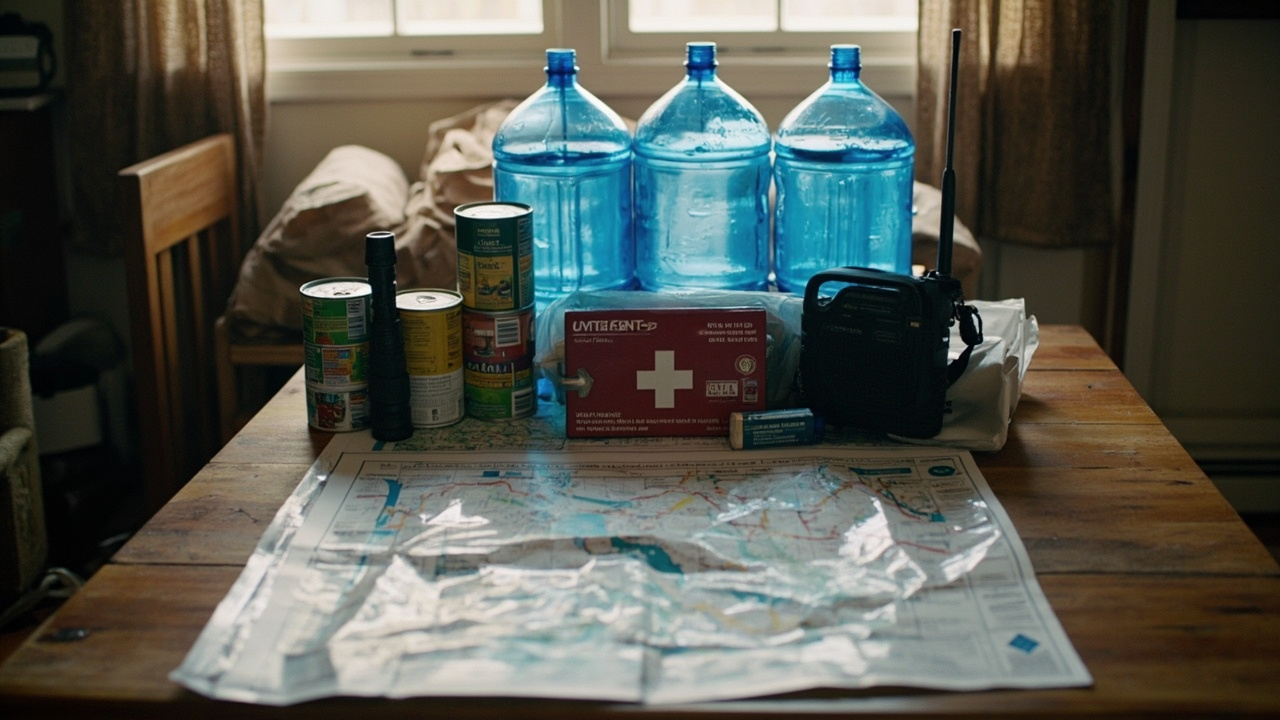
According to the "Build A Kit" page, a basic emergency supply kit could include water at one gallon per person per day for several days for drinking and sanitation, and food at a several-day supply of non-perishable food. The basic list also names a battery-powered or hand crank radio and a NOAA Weather Radio with tone alert, flashlight, first aid kit, extra batteries, whistle to signal for help, dust mask to help filter contaminated air, plastic sheeting with scissors and duct tape to shelter in place, moist towelettes with garbage bags and plastic ties for personal sanitation, wrench or pliers to turn off utilities, manual can opener for food, local maps, and cell phone with chargers and a backup battery.
According to the same page, additional supplies to consider based on individual needs include soap, hand sanitizer and disinfecting wipes to disinfect surfaces; prescription medications, over-the-counter drugs, and vitamins; non-prescription medications such as pain relievers, anti-diarrhea medication, antacids or laxatives; prescription eyeglasses and contact lens solution; infant formula, bottles, diapers, wipes and diaper rash cream; pet food and extra water for pets; cash or traveler's checks; copies of insurance policies, identification and bank account records saved electronically or in a waterproof portable container; sleeping bag or warm blanket for each person; complete change of clothing appropriate for climate and sturdy shoes; fire extinguisher; matches in a waterproof container; feminine supplies and personal hygiene items; mess kits, paper cups, plates, paper towels and plastic utensils; paper and pencil; and books, games, puzzles or other activities for children.
According to the "Build A Kit" page, canned food should be kept in a cool, dry place, boxed food should be stored in tightly closed plastic or metal containers, expired items should be replaced as needed, and household needs should be reconsidered every year with kit updates as family needs change.
According to the "Build A Kit" page, supplies should be prepared for home, work, and cars because the location during an emergency is unknown. The page says to keep the home kit in a designated place ready for rapid departure and to make sure all family members know its location; to be prepared to shelter at work for at least 24 hours with food, water, medicines, comfortable walking shoes, and other necessities in a grab-and-go case; and to keep emergency supplies in the car in case occupants are stranded.
Documents, Insurance, and Property Records
According to the Are You Ready? PDF, recovery preparation includes gathering emergency supplies and securing information and important documents needed to start recovery. A later section addresses insurance options, documenting property, and protecting property to minimize damage.
According to the Ready.gov "Make A Plan" page, related materials include Document and Insure Your Property, Safeguard Critical Documents and Valuables, Save Important Documents to the Cloud graphics, Emergency Financial First Aid Kit, and Consumer Financial Protection Bureau Disaster Checklist.
According to the "Free Publications" page, the Safeguard Critical Documents and Valuables guide includes a checklist to help prepare documents needed for an insurance claim after a disaster. The Are You Ready? table of contents lists subsections on coverage, flood insurance and flood risk, documenting property, and protecting property.
Alerts, Practice, and Community Action
According to the Are You Ready? PDF, households should use existing alert and warning systems, practice disaster plans, and explore ways to serve the community. The take-action section lists keeping informed about alerts and warnings, knowing insurance options and documenting property, protecting property, practicing plans, and taking part in the community.
According to the "Free Publications" page, A Guide for Alerts and Warnings contains information about 17 hazards, their alerts, and protective actions. The same page lists a Commuter Emergency Plan for travel between work and home and other commonly visited locations.
According to the 2025 National Preparedness Month Toolkit page, households are encouraged to find the local National Weather Service office at weather.gov to receive updates before, during, and after hazardous weather. The toolkit also recommends keeping emergency contact cards in wallets and backpacks, including an out-of-state contact, and checking smoke detectors, flashlights, and portable chargers.
According to the "Make A Plan" page, additional materials include Know Your Alerts and Warnings, 12 Ways to Prepare, Low and No Cost Preparedness graphics, Tips for Medications graphics, Emergency Plan for Commuters, Pet Owners information, and preparedness materials for older adults, caregivers, and people with disabilities listed on the publications hub.
Recovery, Assistance, and Fraud Awareness
According to the Are You Ready? PDF, the recovery section covers health and safety guidelines, checking the home before entry and inside the home, filing an insurance claim, coping with disaster, disaster assistance, protection from disaster-related fraud and scams, and giving support. Listed home checks include natural gas, sparks and broken or frayed wires, roof, foundation and chimney cracks, appliances, water and sewage systems, food and other supplies, basements, cabinets, and pests or vermin.
According to the same PDF, the insurance-claim sequence involves contacting the insurer to start the process, documenting damage and protecting property, and working with the adjuster and completing a proof of loss to support the claim.
According to the Department of Homeland Security planning page, linked planning resources include Disaster Kit Contents, Make a Plan, Family Emergency Plan and Communication, Financial Preparedness, School Emergency Plan, Campus Emergency Plan, Workplace Plans, and warning systems and signals.
Sources referenced
- Are You Ready? Guide | Ready.gov (https://www.ready.gov/collection/are-you-ready)
- Are You Ready? An In-Depth Guide to Citizen Preparedness (PDF) (https://www.ready.gov/sites/default/files/2021-11/are-you-ready-guide.pdf)