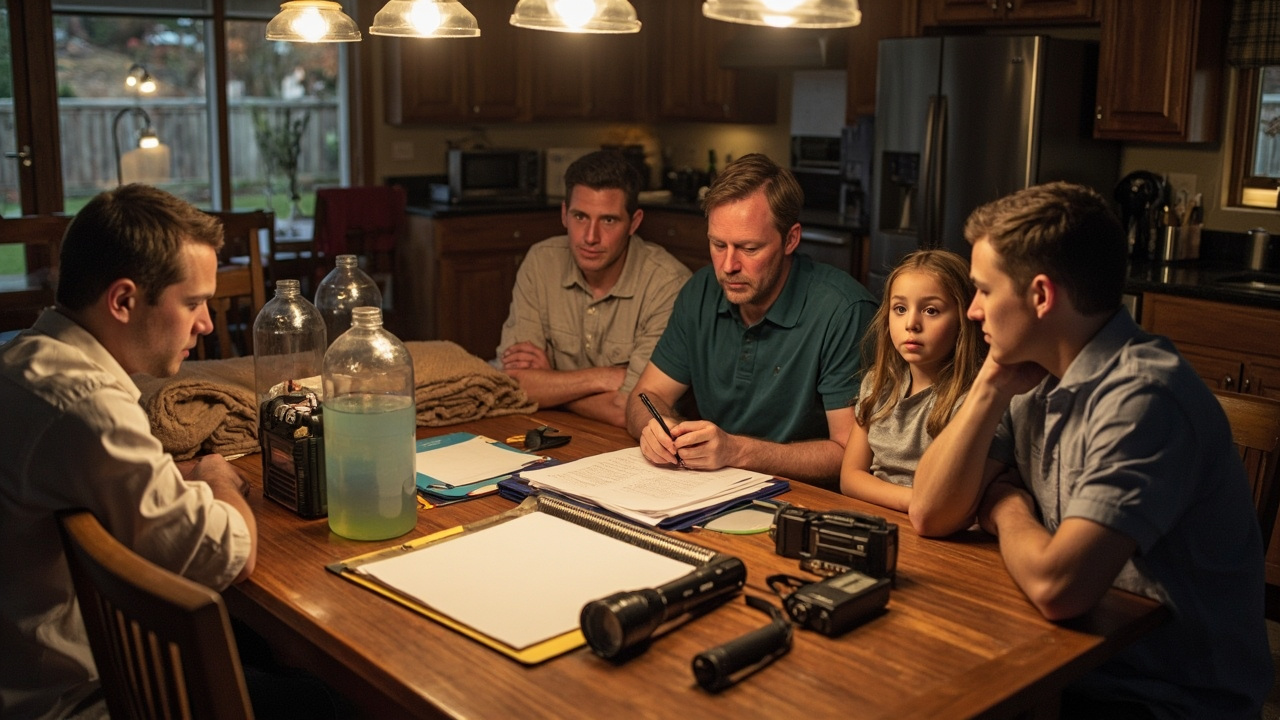
TL;DR: Build a written family emergency plan covering safe locations, contacts, reunification and different hazards, plus a portable disaster supplies kit with food, water and essentials for several days.
Why DHS Says to Plan Before You Separate
According to the Department of Homeland Security page titled Prepare My Family for a Disaster, last updated 08/26/2025, families may not be together when a disaster strikes, so creating a plan in advance matters.
That DHS resource states it is also essential to have a disaster supplies kit that includes basic items from your home that you may need in case of emergency.
The same DHS page lists four questions every household plan should answer:
- How you will get to a safe place
- How you will contact each other
- How you will get back together
- What you will do in different situations
DHS groups its linked planning resources under Disaster Kit Contents, Make a Plan, Family Emergency Plan and Communication, Financial Preparedness, School Emergency Plan, Campus Emergency Plan, Workplace Plans, and warning systems and signals.
September reinforces that timing. According to the Study in the States guide dated September 12, 2025, September is National Preparedness Month, an annual initiative led by the Federal Emergency Management Agency's Ready Campaign.
That guide identifies this year's theme as “Preparedness Starts at Home,” focused on basic steps of preparedness.
According to the 2025 National Preparedness Month Toolkit published by Ready.gov, residents are asked to take four key actions: know the different types of emergencies that could happen and appropriate responses to stay safe, make a family emergency plan, build an emergency supply kit, and get involved in their community by taking action to prepare for emergencies.
Step 1: Hold a Household Planning Meeting
According to Ready.gov's Make A Plan page, families should start by knowing which types of disasters could affect their area.
That page advises households to know how members will contact one another and reconnect if separated, and to establish a family meeting place that is familiar and easy to find.
Ready.gov lists five discussion prompts for that first family meeting:
- How will I receive emergency alerts and warnings?
- What is my shelter plan?
- What is my evacuation route?
- What is my family and household communication plan?
- Do I need to update my emergency preparedness kit?
The Study in the States guide recommends completing FEMA's free Family Emergency Plan together with family, roommates or close friends.
That student guide says the written plan can include where to meet, who to contact, evacuation routes and what to do if phone or internet service is unavailable.
The 2025 National Preparedness Month Toolkit echoes that structure, listing meeting points, assigned responsibilities, practiced evacuation routes and a communication plan as core plan elements.
For commuters and workers, Ready.gov also offers an Emergency Plan for Commuters document in PDF format.
Step 2: Match the Plan to Your Household
According to Ready.gov's Make A Plan page, households should customize plans and supplies to specific daily living needs and responsibilities.
That page asks families to discuss how people in their network can assist each other with communication, care of children, business, pets or other needs.
Ready.gov lists the following factors to review:
- Different ages of members within the household
- Responsibilities for assisting others
- Locations visited frequently
- Dietary needs
- Medical needs including prescriptions and equipment
- Disabilities or access and functional needs including devices and equipment
- Languages spoken
- Cultural and religious considerations
- Pets or service animals
- Households with school-aged children
The Study in the States guide adds that students should consider unique situations such as pets, medical conditions, disability accommodations or lack of local support, and include those details in planning.
DHS also points households toward School Emergency Plan, Campus Emergency Plan and Workplace Plans resources, recognizing that children, college students and workers spend large parts of the day away from home.
For financial continuity, DHS lists Financial Preparedness among its planning resources, while Ready.gov links an Emergency Financial First Aid Kit in PDF format and a Consumer Financial Protection Bureau Disaster Checklist in PDF format.
Step 3: Write It Down and Practice It
According to Ready.gov's Make A Plan page, families can create their emergency plan quickly using a fillable form.
That form, titled Make a Family Emergency Plan, collects household information, names and contacts of family members, meeting places and medical information.
Ready.gov also provides a Family Communication Plan Fillable Card, available in English and additional languages, to keep contact details accessible.
The 2025 National Preparedness Month Toolkit recommends keeping emergency contact cards in wallets and backpacks, and including an out-of-state contact, noting that such contacts are often easier to reach during local emergencies.
According to Ready.gov, the final planning step is to practice the plan with the household.
The Toolkit similarly urges households to practice evacuation routes and review assigned responsibilities.
Households seeking printed help can use Ready.gov's Free Publications page, which states that Federal Emergency Management Agency files for Ready Campaign publications are available to download at no cost. Offerings listed there include the Family Communication Plan Fillable Card, Emergency Supply List, 12 Ways to Prepare, Safeguard Critical Documents and Valuables, Prepare Your Pets for Disasters, the Disaster Preparedness Guide for Older Adults, the Disaster Preparedness Guide for Caregivers, and hazard information sheets.
What Goes in a Basic Disaster Kit
According to Ready.gov's Build A Kit page, after an emergency residents may need to survive on their own for several days, so having personal food, water and other supplies to last for several days is the goal.
That page describes a disaster supplies kit as a collection of basic items a household may need in an emergency.
For assembly, Ready.gov recommends storing items in airtight plastic bags and placing the full kit in one or two easy-to-carry containers such as plastic bins or a duffel bag.
The basic checklist on Build A Kit includes:
- Water, one gallon per person per day for several days, for drinking and sanitation
- Food, at least a several-day supply of non-perishable food
- Battery-powered or hand crank radio and a NOAA Weather Radio with tone alert
- Flashlight
- First aid kit
- Extra batteries
- Whistle to signal for help
- Dust mask to help filter contaminated air
- Plastic sheeting, scissors and duct tape to shelter in place
- Moist towelettes, garbage bags and plastic ties for personal sanitation
- Wrench or pliers to turn off utilities
- Manual can opener for food
- Local maps
- Cell phone with chargers and a backup battery
The Study in the States guide describes a similar go-bag for at least 72 hours, including non-perishable food, water, flashlight, batteries, portable phone chargers and a radio.
Ready.gov's 2025 National Preparedness Month Toolkit lists comparable power-outage essentials: battery-powered radio, flashlights and extra batteries, portable charger for phones, and non-perishable foods.
Personalize and Maintain Your Supplies
According to Ready.gov's Build A Kit page, households should consider unique needs such as supplies for pets or seniors after reviewing basic items.
Additional supplies listed there include soap, hand sanitizer and disinfecting wipes to disinfect surfaces.
For medications, that page notes that about half of all Americans take a prescription medicine every day, and that an emergency can make refills difficult or pharmacies hard to find. It directs households to organize and protect prescriptions, over-the-counter drugs and vitamins.
Other health and comfort items on that list include non-prescription medications such as pain relievers, anti-diarrhea medication, antacids or laxatives, prescription eyeglasses and contact lens solution, and infant formula, bottles, diapers, wipes and diaper rash cream.
For pets, the list includes pet food and extra water. The Toolkit's pet guidance calls for a 7-day food and water supply, medications and medical records, first aid supplies, and collar with tag harness and leash.
For documents and money, Ready.gov lists cash or traveler's checks, plus copies of insurance policies, identification and bank account records saved electronically or in a waterproof, portable container.
The page also lists a sleeping bag or warm blanket for each person, a complete change of clothing appropriate for climate and sturdy shoes, a fire extinguisher, matches in a waterproof container, feminine supplies and personal hygiene items, mess kits, paper cups, plates, paper towels and plastic utensils, paper and pencil, and books, games, puzzles or other activities for children.
Maintenance has four parts on Build A Kit: keep canned food in a cool, dry place, store boxed food in tightly closed plastic or metal containers, replace expired items as needed, and re-think needs every year and update the kit as family needs change.
Store Kits for Home, Work and Vehicle
According to Ready.gov's Build A Kit page, households should prepare supplies for home, work and cars because the location during an emergency is unknown.
For home, that page says to keep the kit in a designated place ready for rapid departure, and to make sure all family members know where it is kept.
For work, that page says to be prepared to shelter at work for at least 24 hours, with a work kit holding food, water and other necessities like medicines, as well as comfortable walking shoes stored in a grab-and-go case.
For vehicles, that page says to keep emergency supplies in the car in case occupants are stranded.
The 2025 National Preparedness Month Toolkit similarly asks what is in the car kit, noting that readiness extends everywhere residents go.
Alerts, Warnings and Community Ties
According to Ready.gov's Make A Plan page, additional resources include Know Your Alerts and Warnings, Document and Insure Your Property, Safeguard Critical Documents and Valuables, and Low and No Cost Preparedness materials.
The Study in the States guide recommends signing up for emergency alerts through a university or local emergency systems, citing NOAA Weather Radio and the FEMA app as examples.
That guide also points to FEMA's low- and no-cost preparedness tips for lower-cost options.
For weather tracking, the 2025 National Preparedness Month Toolkit directs residents to find their local National Weather Service office at https://www.weather.gov/ to receive updates before, during and after hazardous weather.
The Toolkit's community message states that residents have responsibilities for families, pets, neighbors and communities, and suggests staying current with the community emergency and disaster plan and working with neighbors to prepare.
That Toolkit also advises considering medical conditions, disabilities, pets and neighbors who might need help getting prepared when making plans.
Sources referenced
- Prepare My Family for a Disaster | Homeland Security (https://www.dhs.gov/prepare-my-family-disaster)
- Make A Plan | Ready.gov (https://www.ready.gov/plan)