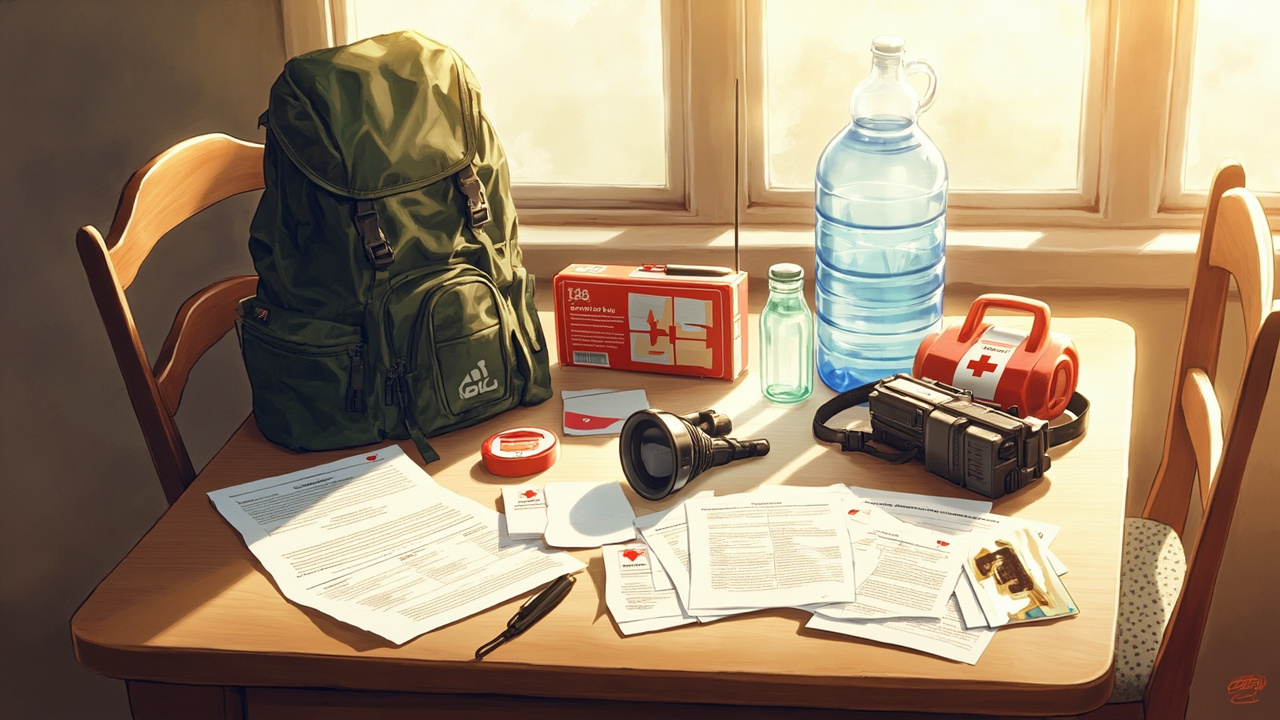
TL;DR: A complete family emergency plan names an out-of-area contact, uses texting first, lists three meeting places with routes, records school and work pickup rules, tracks medications and pet needs, protects document copies, stages a 72-hour kit, and is practiced twice a year.
A one-evening plan that answers four questions
A usable first version can be finished tonight, printed for every go-bag, and saved on everyone's phone, according to the Protocol Survival guide titled Family Emergency Plan: Step-by-Step Guide + Free Printable Template (PDF).
The document answers how household members will reach each other, where they will meet, who picks up the kids, and what older relatives need.
The core checklist in that guide calls for an out-of-area contact, a texting plan, three meeting places with routes, school and work pickup plans, medications and medical needs, a pet plan, copies of documents, utility shutoff locations, and a basic 72-hour kit.
Keep one printed copy in each go-bag and a digital reference on each phone so the information remains available when someone is away from home.
Use the fill-in template at the end of this article to capture each decision on a single page.
Step 1: Match the plan to local risks
Start with hazards likely where you live rather than every possible disaster.
The Protocol Survival guide points to hurricanes and flooding on the coasts, tornadoes in the Plains and South, wildfires and earthquakes in the West, ice storms and blizzards in the North, and power outages almost everywhere.
Sign up for county emergency alerts and confirm Wireless Emergency Alerts are switched on in every phone's settings.
The Tennessee Emergency Management Authority guidance released September 30, 2026 suggests framing the household conversation around simple prompts such as what to do if power fails, who to call for help, where to meet if leaving home, and who the community helpers are.
Families can turn a reading or discussion into action by checking that everyone knows emergency contacts, selecting a meeting place, confirming each child knows the home address, turning on emergency alerts, adding one item to the kit, and identifying neighbors to check on after a storm.
Step 2: Set an out-of-area contact and texting rule
Designate one person outside the local area as the central check-in point.
The reason is practical: long-distance connections can complete while local circuits remain congested after a regional event, according to the Protocol Survival guide.
Share the plan with that contact in advance so the person understands the relay role.
Add a backup contact in case the first person cannot be reached, a step described in the AboutPreppers guide titled Family Emergency Communication Plan: A Step-by-Step Guide.
Agree that everyone will text before calling because messages can pass through when networks are crowded.
Keep messages brief and include location plus name.
Write every important number on paper because many people no longer remember family numbers without a phone, and place a wallet card in every backpack and purse.
Learn the school and workplace emergency procedures, including where children would be taken and how authorized pickup works.
Step 3: Choose three meeting places and two routes
Select a spot immediately outside the home for sudden events such as fire, for example a neighbor's mailbox.
Select a second location inside the neighborhood for situations when no one can return home, such as a library, place of worship, or school.
Select an out-of-town destination for evacuation, such as a relative or friend's home.
Write down two travel routes to the out-of-town destination and keep a paper map in the vehicle.
The Day Zero Prep communications guide titled Family Emergency Communication Plan notes a four-part version used in the Ready.gov family plan template: an indoor safest room for severe weather, a neighborhood point for a house fire, an out-of-neighborhood location when home is unreachable, and an out-of-town place when the community evacuates.
Whichever format a household uses, make each place familiar and easy to find.
Walk to the neighborhood spot at least once so younger children recognize the way.
Step 4: Record medical, mobility, and age-specific needs
List every prescription with dose, prescribing doctor, and pharmacy.
Ask a doctor about maintaining a buffer supply where appropriate.
Plan backup power for devices such as CPAP or oxygen equipment, and ask the utility about programs for customers who depend on powered medical equipment.
Include formula, diapers, and comfort items for babies and young children, along with a clear pickup assignment.
For older adults and people with disabilities, note mobility aids, hearing-aid batteries, and a neighbor assigned to check in.
A student-prepared emergency plan summary from The Bright Side also lists allergies, medical conditions, medications and dosages, doctor contact information, and health insurance information as essential medical entries.
Store at least one contact under ICE, meaning In Case of Emergency, in every phone so responders know whom to call, a practice noted in both the Day Zero Prep guide and the AboutPreppers guide.
Step 5: Protect IDs, policies, and medical records
Copy identification cards, insurance policies, deeds or leases, medical records, and birth certificates.
Place one set in a waterproof bag inside the go-bag.
Maintain an encrypted digital copy accessible from any device.
The Bright Side school summary adds go-bag, first-aid kit, flashlight, fire extinguisher, extra water, and extra food locations to the household information section, alongside utility shutoff instructions.
Record the utility outage line with account number and mark the water, gas, and electric shutoff locations on the family template.
After flooding, keeping documents in waterproof bags prevents a second loss, while never driving through flood water remains the associated travel rule in the Protocol Survival hazard table.
Step 6: Stage a basic 72-hour kit
Build first for three days before extending toward longer periods.
The Capable Home guide titled Family emergency plan | Contacts, first steps & printable checklist cites the CDC minimum of 1 gallon per person per day, meaning a four-person household needs at least 12 gallons for three days before accounting for pets, heat, or illness.
The Protocol Survival short list includes water for at least three days at that same rate, non-perishable food for three days with a manual can opener, a battery or hand-crank NOAA Weather Radio, flashlight with extra batteries, first-aid kit with a week of prescription medications, whistle, dust masks with plastic sheeting and duct tape, moist towelettes with garbage bags and plastic ties for sanitation, wrench or pliers for utilities, phone chargers with a power bank, plus cash, document copies, and local paper maps.
Add child, senior, and pet extras along with separate car and work kits when expanding beyond the base list.
Capable Home advises covering three days first because written contacts, a meeting place, three days of water, and knowledge of safe food handling protect a household before equipment purchases.
Assign stay-or-go decisions by hazard
Write the intended action for each likely event directly on the plan.
For power outages, the usual choice is to stay and manage water, light, heat or cooling, and medications requiring refrigeration.
For hurricanes, follow the assigned evacuation zone, know the route and lodging location, and leave early.
For tornadoes, shelter on the lowest floor in an interior room without windows and keep helmets and shoes for children nearby.
For wildfires, leave when instructed or earlier, using a 10-minute grab list, two exit routes, and N95 masks for smoke.
For floods, move to higher ground.
For earthquakes, drop, cover, and hold on, secure heavy furniture in advance, and know how to shut off gas.
For winter storms, usually stay while arranging safe heat, pipe protection, and the location of a warming center.
Make the plan usable for children
Place a card in every backpack showing two contact numbers and the meeting places.
Teach children how and when to call 911 and confirm they can state the full home address.
Agree on a family code word that any alternate pickup person must provide before a child leaves school with that person.
That pickup safeguard appears in the Protocol Survival guide's section on making the plan work for kids.
Keep drills short and calm so practice feels routine rather than frightening.
Tennessee Emergency Management Authority guidance recommends letting children's questions lead, pausing during shared reading, asking what a character should do next, discussing one safety step the household already takes, and finding unfamiliar answers together.
Small discussions can then cover the family plan, trusted adults, home address, calling 911, checking weather alerts, or assembling a kit together.
Practice twice a year and keep paper copies current
Walk the full plan once with everyone: travel to the meeting spot, send the out-of-area check-in text, and locate the kit.
Review the document at least twice a year, paired with rotating stored water in the Protocol Survival schedule.
The Bright Side summary gives the same twice-yearly review frequency so every member remembers what to do.
Update the pages whenever a phone number, school, job, medication, or pickup authorization changes.
Print copies for each person or save the file to their phones, and replace worn wallet cards promptly.
Run a no-phones drill on a calm Saturday by treating cellular service as unavailable, moving to the neighborhood spot, and contacting the out-of-area relay, an exercise recommended in the Day Zero Prep guide to reveal gaps.
Printable family template fields
Copy these lines onto one page or index card for each bag, wallet, and vehicle:
Out-of-area contact name and phone; backup contact name and phone; near-home meeting place; neighborhood meeting place; out-of-town destination with two routes; school and daycare pickup plan with authorized names; medications, doses, doctors, and pharmacy; utility outage line and account number; water, gas, and electric shutoff locations; pet food, carrier, vaccination records, and pet-friendly lodging options; document storage location; and 72-hour kit storage location.
In an emergency, call 911. Text-to-911 is available in many areas but not everywhere, so call when possible, according to the AboutPreppers guide.
Sources referenced
- Family Emergency Plan: Step-by-Step Guide + Free Printable Template (PDF) | Protocol Survival (https://griddowncommand.com/guides/family-emergency-plan.html)