TL;DR: Report a NYSEG electric outage online or at 800.572.1131, track restoration on the outage list and map, and get text, email or phone alerts through your online account.
New York State Electric & Gas tells households to report a loss of electric service through its website form or by calling 800.572.1131, according to Outages Help - NYSEG. That same help page directs people with a natural gas emergency to leave the building first, then call 800.572.1121 or 911 from a safe location.
For households preparing for interruptions, the utility pairs those contacts with outage alerts, posted restoration estimates, an outage map and list, emergency resource updates, and storm checklists covering lights, food, water, heat, and appliance safety.
How to report an electric outage
NYSEG offers online reporting and telephone reporting for electric service interruptions. The online path uses the company's Report Electric Outage form. The telephone path uses 800.572.1131, according to Outages Help - NYSEG.
Before using the online form, the company asks customers to consider whether the trouble may be inside the home. Its reporting guidance lists four checks: whether neighbors have power, whether streetlights are lit, whether breakers are tripped or fuses are blown, and whether lights are out in only one room, according to Report Electric Outage - NYSEG.
If the answer to any of those questions is yes, the company says not to submit the online report because the issue may involve customer equipment. It states that if crews respond and find the problem is with customer electrical equipment, the customer will be billed for the service call. In that situation, it directs customers to call 800.572.1131 to discuss the problem instead, according to Report Electric Outage - NYSEG.
A life-threatening electricity emergency calls for a different step: call 911 immediately. For other electric outages or trouble, customers may contact 800.572.1131 or use the online form, according to Report Electric Outage - NYSEG.
Natural gas problems have separate instructions. If people suspect a leak or face a natural gas emergency, NYSEG uses the phrases get up, get out and get away, then call 800.572.1121 or 911 from a safe location, according to Outages Help - NYSEG. Its Storm Safety - NYSEG page adds that households whose basement or home faces flooding should ask the company to turn off electricity or natural gas service, and should not enter a flooded building until those services are off.
How to get restoration times and outage alerts
Once an outage is reported, NYSEG points customers to its List of Electricity Outages page for estimated restoration times, according to Outages Help - NYSEG. Customers also can check current conditions through an outage list lookup tool and an interactive outage map, according to Outages - NYSEG.
NYSEG's alert system can send outage information by text message, email, phone, or all three methods. Alerts can include notice that an outage was detected, an estimated restoration time, a change to that estimate, notice that power is restored, and information about upcoming system improvements, according to Outage Alerts - NYSEG.
Enrollment runs through a NYSEG online account. Customers sign in or create an account, open preferences, choose alerts, add contacts, agree to terms, and save preferences, according to Outage Alerts - NYSEG. The company describes Outage Alerts as a free service, while noting that standard text and data rates from a cellular provider may apply.
Customers who are enrolled for text alerts can text OUT to 697348 to report an outage, according to Outage Alerts - NYSEG. The alerts page also says customers can use the online form, call 800.572.1131 for electric outages or 800.572.1121 for natural gas, and call 911 in a life-threatening situation.
NYSEG says alerts can begin about an hour after signup, and that alerts started during an outage can still provide information for that event. Accounts in more than one location can receive separate outage alerts for each location, and customers may add up to five contacts for each delivery method, according to Outage Alerts - NYSEG.
What estimated restoration times mean
An Estimated Time of Restoration, or ETR, is the time the company expects power to return at a particular location, based on location, cause, and assessed repairs, according to Estimated Restoration Times | NYSEG - NYSEG.
During days without a weather event, the company says it provides an initial estimate based on past performance restoring power in a similar situation. It may label an outage as assessing when it knows service may be affected but has not finished investigating required repairs. Estimates may change as crews evaluate cause, damage extent, and safe repair time, according to Estimated Restoration Times | NYSEG - NYSEG.
During severe weather, NYSEG says it first assesses damage and works with emergency responders on safety tasks such as guarding, removing or de-energizing downed wires and clearing inaccessible areas for vehicle entry or exit. It then predicts restoration times for large areas of its territory and updates outage information as conditions change, according to Estimated Restoration Times | NYSEG - NYSEG.
The company also describes broader estimates. A Global ETR covers the company's entire service area. A Local ETR covers a specific location, typically smaller in size such as a town or neighborhood, with an account-specific time provided where applicable, according to Estimated Restoration Times | NYSEG - NYSEG.
Changes are common because the first estimate reflects average restoration experience and whether the outage is isolated, such as a tree on a wire, or part of a larger storm. Arrival of field crews allows a more accurate assessment of damage and repair time, which can shift the posted time, according to Estimated Restoration Times | NYSEG - NYSEG.
How NYSEG restores power
NYSEG says its emergency restoration plan is intended to help crews repair downed lines and return customers as quickly as possible, while giving priority to critical facilities such as hospitals and shelters, according to Outages Help - NYSEG.
Its storm safety explanation sets public safety first: responding to known downed-wire incidents to make the area safe. After that work, the company says it assesses damage to the electricity delivery system, develops a detailed restoration plan, and completes repairs as quickly as possible, according to Storm Safety - NYSEG.
After major storms, repairs generally start with transmission lines and substations that move electricity to the local distribution system. Work then moves to poles and power lines along streets and roads. During that process, the company says it considers hospitals, nursing homes, fire and police stations, and other critical infrastructure, and stays in contact with customers who depend on electrically operated life-support equipment, according to Storm Safety - NYSEG.
What to keep ready before a storm
NYSEG urges households to prepare before storms because safety information may be hard to view once power fails. It offers a downloadable reference titled Weathering Storm Emergencies, also available in Spanish as Sobreviviendo Emergencias de Tormentas, according to Storm Safety - NYSEG.
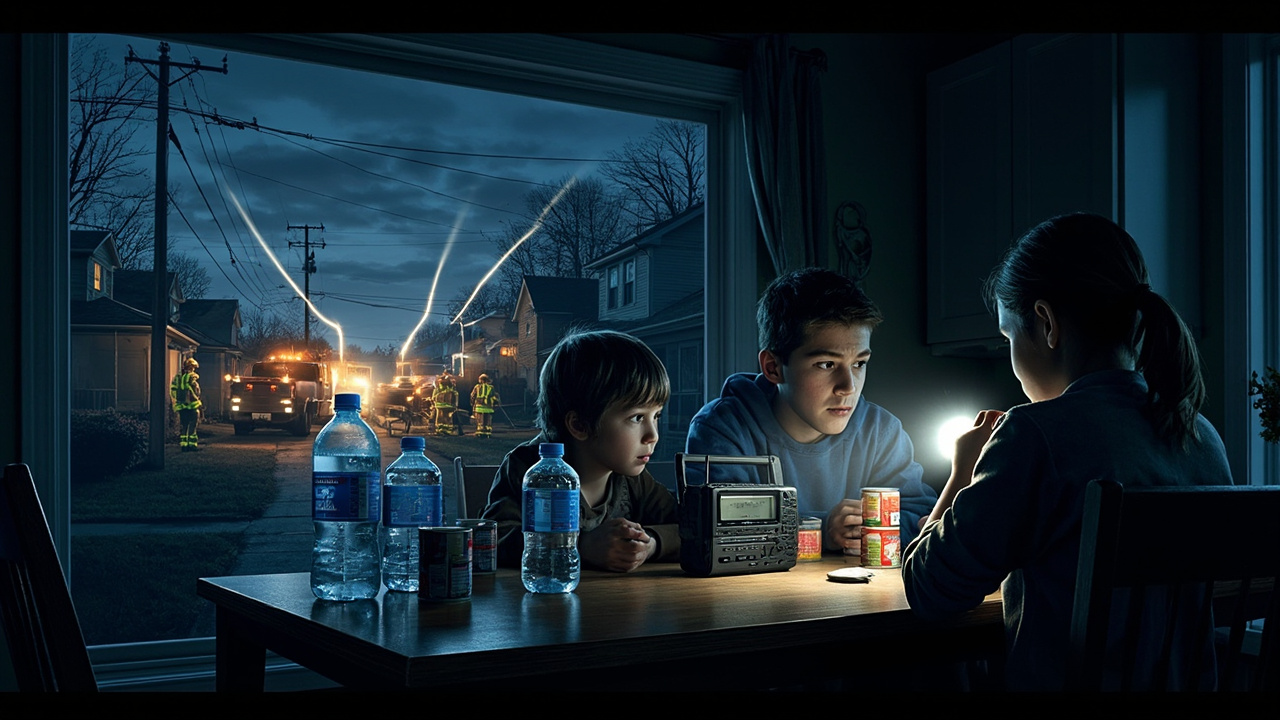
The core home checklist calls for flashlights, a battery-powered radio, fresh batteries, extra batteries, bottled water, and non-perishable food, according to Storm Checklist - NYSEG. It also calls for at least one telephone that does not depend on electricity because cordless phones will not work during an interruption, plus a fully charged cell phone battery, according to Storm Checklist - NYSEG.
NYSEG also recommends contacting neighbors during an apparent outage because the problem may be a blown fuse or tripped circuit breaker, according to Storm Safety - NYSEG. Its storm checklist separately advises turning off major appliances and sensitive electronics to reduce overloading or damage when service returns, leaving one light switch on to show restoration, and confirming electric stove tops and ovens are off because burners may heat when power returns, according to Storm Checklist - NYSEG.
The affected appliances named include electric water heaters, refrigerators and freezers, televisions, VCRs, DVD players, computers, and stereos. Shutting them down may require unplugging equipment, switching off a breaker, or removing a fuse for that household circuit, according to Storm Checklist - NYSEG.
Heating and cooking plans need attention. NYSEG says to plan for emergency heating and cooking, never use an outdoor grill or stove indoors, and not use a natural gas or propane range to heat a home. It also recommends placing extra blankets and warm clothing where they are easy to find and using layered clothing to stay warm, according to Storm Checklist - NYSEG.
Water planning includes storing drinking water in extra bottles or plastic containers. Where a household uses an electric water pump, the checklist recommends filling pails, kettles, bathtubs, and sinks for other uses. It also recommends canned and dried foods needing no refrigeration and little or no cooking, with an old-fashioned manual can opener available, according to Storm Checklist - NYSEG.
For longer outages, NYSEG advises dressing warmly, staying dry, opening refrigerator and freezer doors as little as possible, and discarding perishable foods that reach 40 degrees Fahrenheit or higher for longer than two hours. It refers readers to the U.S. Food and Drug Administration website for food and water protection guidance, according to Storm Checklist - NYSEG.
Cold weather offers limited outdoor options. The company says food may be stored in a shed or garage when it is cold, and frozen food may be kept outside in wooden or metal containers below freezing, placed out of direct sunlight. It also advises using water sparingly, reusing cooking and washing water for toilet flushing, wrapping pipes with insulation or newspaper when heat is off, and, in very cold weather, letting a faucet drip or draining pipes while saving the water, according to Storm Checklist - NYSEG.
Downed lines, flooding, medical equipment, and generators
Downed power lines require distance. NYSEG warns that even lines that look dead can be deadly, says no line is safe to touch, and asks people to call 800.572.1131 about downed lines or hazardous situations. It also asks people not to pull away tree debris because downed lines may be entangled in it, according to Storm Safety - NYSEG.
Flooded basements carry electrical and gas hazards. The company says to stay out of flooded basements because wiring or outlets below the water line may be energized and because natural gas service in a flooded basement may also be dangerous, according to Storm Safety - NYSEG.
Anyone using electricity-dependent life-sustaining equipment should contact 800.572.1111. NYSEG says it may enroll the person in a critical-customer program or give specific advice for preparing for interruptions, according to Storm Safety - NYSEG.
Emergency generators need careful operation. The company calls them dangerous, directs users to follow manufacturer instructions closely, and says to run a generator outdoors in a clean, dry, well-ventilated area, never indoors or in a garage, according to Storm Safety - NYSEG.
Road safety is also part of outage readiness. NYSEG notes state law requires drivers approaching an intersection with failed or malfunctioning signals to stop as for a stop sign, then proceed under right-of-way rules unless directed by a traffic officer, according to Storm Safety - NYSEG.
Emergency resources and support numbers
NYSEG points customers to its website for outage updates, news releases, and bottled water and dry ice distribution stations, according to Outages Help - NYSEG. Its outage hub also lists bottled water and dry ice locations, warming and cooling locations, and safety tips under Emergency Resources, according to Outages - NYSEG.
For routine support, the company lists 24/7 automated support at 800.600.2275 and customer representatives at 800.572.1111 Monday through Friday from 7 a.m. to 7 p.m., excluding holidays. Payment arrangements use 888.315.1755, according to Outages Help - NYSEG.
After service returns, NYSEG advises turning appliances and sensitive electronics on one at a time to avoid overloading circuits. If a basement or home flooded, it advises having an electrician inspect the home and a plumbing and heating contractor inspect natural gas appliances before asking for service restoration. It also advises replenishing emergency supplies used during the storm, according to Storm Safety - NYSEG.