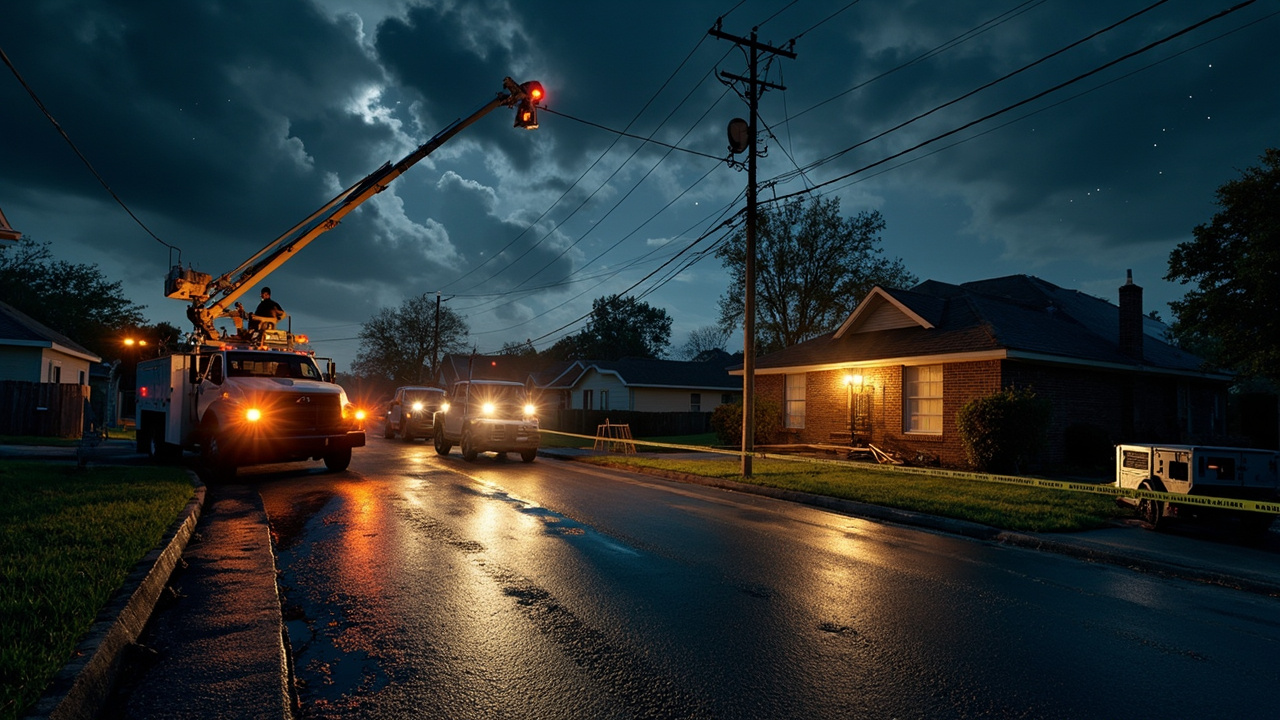
TL;DR: Protect equipment, stay clear of lines, and run generators outdoors during restoration
TL;DR: When CenterPoint Energy restores power, unplug sensitive electronics, leave one light on, reconnect appliances gradually, stay clear of downed lines, and operate portable generators only outdoors away from the home.
Household safety during restoration starts before lights return. According to Power Restoration Safety tips | CenterPoint Energy, surges can occur when electricity returns for many customers at once, and those surges may damage appliances and sensitive equipment.
That page notes that smart grid technology helps the company identify outages faster and restore power more efficiently. It also explains restoration priorities and household steps that support safe recovery.
How CenterPoint Energy sequences restoration work
Understanding the repair order helps households set expectations and avoid interfering with crews.
According to Power Restoration Safety tips | CenterPoint Energy, restoration follows these priorities:
- Service to key facilities vital to public safety, health and welfare, including hospitals, police departments and fire departments
- Strategic line repairs that return power to the most customers at a time
- Transformer repairs
- Service drops and underground lines serving individual homes
The company's weather-safety guidance adds context. According to Weather : Preparing for a storm | CenterPoint Energy, restoration time depends on severity of damage and necessary safety clearances. Critical facilities such as hospitals and emergency services receive priority, followed by work intended to restore service to the greatest number of customers as quickly as possible.
Households can check the Outage Center for updates on their area, according to that same weather-safety resource. A separate Action Center resource, Stay Informed on Outages Near You | Action Center | CenterPoint Energy, describes the mobile-friendly Outage Tracker for outage details and restoration activity, including estimated restoration time and power status at a location.
Report the outage with useful details
Prompt reporting helps the restoration process.
According to Power Restoration Safety tips | CenterPoint Energy, customers without power should report the outage to CenterPoint Energy, provide the account number, and share information about what happened before the outage.
The Outage Tracker resource states that an outage can be reported with the REPORT button using a phone number or meter number plus house number, according to Stay Informed on Outages Near You | Action Center | CenterPoint Energy. That resource also describes a weather function, improved reliability during high demand, English and Spanish views, and pop-up displays showing estimated restoration time and power status.
During storm recovery, additional hazard reporting is available. According to Weather : Preparing for a storm | CenterPoint Energy, a downed power line can be reported through the Report a hazard function on Outage Tracker.
Protect electronics and appliances from surge damage
An outage is the time to prepare for the moment electricity returns.
According to Power Restoration Safety tips | CenterPoint Energy, customers should consider unplugging computers, televisions and other sensitive equipment before power is restored. If it is safe to do so, customers should consider turning off the air conditioner. Leaving one light on signals when power has returned.
The weather-safety page gives the same protective direction for severe weather: stay indoors away from windows and, if power is lost, unplug sensitive electronics to prevent surge damage, according to Weather : Preparing for a storm | CenterPoint Energy.
Reconnection should be gradual. According to Power Restoration Safety tips | CenterPoint Energy, households should first plug in small appliances, next connect large appliances, and finally turn on air conditioning. The company states that this gradual approach can help protect equipment from damage that may result from a power surge.
Know which electrical parts belong to the homeowner
Restoration can stall when customer-owned equipment is damaged.
According to Power Restoration Safety tips | CenterPoint Energy, the company repairs and restores the electric delivery system up to the point where it connects to a home or business, consistent with applicable tariffs, service regulations and local requirements. Customers are responsible for damage to the meter box or weatherhead where overhead service connects to the home.
The page identifies three parts to inspect by walking around the home:
- Service drop: the small power line between the electric pole and the house. Crews will repair this line if damaged in many cases.
- Weatherhead: the capped pipe connecting the service drop to the meter box. The customer owns this equipment.
- Meter box: the metal box attached to the house that holds the electric meter. The customer owns this equipment.
If the meter box or weatherhead is damaged, a licensed electrician must complete repairs before service can be restored. When damage is uncertain, customers should contact a licensed electrician for inspection, according to Power Restoration Safety tips | CenterPoint Energy.
Related equipment guidance reinforces ownership and handling limits. According to Power Outage Safety: Service Drops & Weatherheads | CenterPoint Energy, service drops extend from utility poles to a home or building, while weatherheads connect overhead lines to the building and remain the property owner's responsibility. A damaged weatherhead requires repair by a qualified electrician before power can be restored.
Stay away from downed lines and damaged equipment
Downed power lines require distance and immediate reporting.
According to Power Restoration Safety tips | CenterPoint Energy, downed lines are extremely dangerous, all downed lines should be assumed live and dangerous, and people should never attempt to move or touch a downed line. Children and pets should be kept away. Even lines that appear dead can become energized suddenly during restoration work.
That restoration page advises staying at least 10 feet away from any power line and checking for lines before trimming trees or clearing debris. The company's weather-safety page uses a larger clearance for storm conditions: stay at least 35 feet away, assume all downed lines are energized and dangerous, then call 911 and report to CenterPoint Energy, according to Weather : Preparing for a storm | CenterPoint Energy.
For service drops that appear disconnected, damaged or hanging low, the equipment-safety page directs people to stay away, never approach or touch the wire with any object, and call CenterPoint Energy immediately at 713-207-2222, according to Power Outage Safety: Service Drops & Weatherheads | CenterPoint Energy. Only trained personnel should handle that equipment.
Other outdoor electrical equipment also requires clearance. According to Power Outage Safety: Service Drops & Weatherheads | CenterPoint Energy, pad-mount transformers are green metal boxes that lower high-voltage electricity for household use. People should stay clear at all times and never place fencing, vegetation or other objects around them because crews need clear access for maintenance and repairs.
Meter tampering creates separate danger. According to Power Outage Safety: Service Drops & Weatherheads | CenterPoint Energy, customers should never tamper with a meter or electrical equipment because tampering is dangerous and illegal.
Operate portable generators without endangering the household or crews
Generators help during outages, but improper use can cause carbon monoxide poisoning, fire, or backfeed that threatens utility workers.
According to Power Restoration Safety tips | CenterPoint Energy, gasoline-powered generators produce deadly carbon monoxide. Generators should always run in a well-ventilated outdoor area and never inside a home or garage. Carbon monoxide can build up quickly even with windows or doors open and cause serious harm or death.
Placement distance matters. According to Weather : Preparing for a storm | CenterPoint Energy, a generator should be placed at least 20 feet from the home in a well-ventilated outdoor area, with battery-operated carbon monoxide detectors installed inside the home. The equipment-safety page adds that generators should be at least 20 feet from windows, doors and vents, with exhaust pointed away from buildings, according to Power Outage Safety: Service Drops & Weatherheads | CenterPoint Energy.
Never connect a generator directly to the home electrical system. According to Power Restoration Safety tips | CenterPoint Energy, electricity can backfeed into power lines and seriously injure or kill workers restoring service. The equipment-safety page similarly warns against plugging a generator into a wall outlet because the practice can electrocute utility workers and damage the electrical system, according to Power Outage Safety: Service Drops & Weatherheads | CenterPoint Energy.
For appliance connections, plug items directly into the generator with heavy-duty, properly grounded extension cords. According to Power Restoration Safety tips | CenterPoint Energy, cords should be checked for fraying or wear because damaged cords can create fire or shock risks.
Follow manufacturer instructions for operation and grounding, use the generator only when necessary, limit appliances to recommended wattage, and never overload the unit. According to Power Restoration Safety tips | CenterPoint Energy, overloading can damage the generator and connected appliances.
Fuel and nighttime use need caution. According to Power Restoration Safety tips | CenterPoint Energy, generators should be turned off at night during sleep and when leaving home to prevent fire hazards. Fuel should be stored in approved containers away from living spaces. Never refuel a hot generator or store fuel near heat sources.
The equipment-safety page adds two related steps: turn off the generator and allow cooling before refueling, and install battery-powered carbon monoxide detectors and test them regularly, according to Power Outage Safety: Service Drops & Weatherheads | CenterPoint Energy.
For broader indoor safety, outdoor combustion equipment should remain outside. According to Weather : Preparing for a storm | CenterPoint Energy, grills, generators and camp stoves should never be used indoors because they produce deadly carbon monoxide.
Professional help is available for uncertain installations. According to Power Restoration Safety tips | CenterPoint Energy, customers with questions should contact the manufacturer or a licensed electrician. Professional installation of a transfer switch by a licensed electrician is described as the safest way to use a generator to power a home.
After the storm: re-entry, water, gas meters and debris
Safe restoration extends beyond electricity, especially after flooding or structural damage.
According to Weather : Preparing for a storm | CenterPoint Energy, occupants should check for natural-gas odor, standing water near outlets, and visible damage before re-entering. If a sulfur or rotten-egg odor is present, leave immediately on foot without operating lights, phones, vehicles or anything that could spark, then call both 911 and CenterPoint Energy at 888-876-5786 from a safe location.
Do not touch electrical equipment, outlets or appliances while standing in water. According to Weather : Preparing for a storm | CenterPoint Energy, even shallow water can conduct electricity and cause electrocution.
Meters that were damaged or submerged require professional inspection. According to Weather : Preparing for a storm | CenterPoint Energy, customers should call before using service if the home meter was damaged or underwater, and submerged equipment must be inspected before use.
Gas-meter access also matters. According to Weather : Preparing for a storm | CenterPoint Energy, clearing debris should leave at least three feet of space from the gas meter on all sides. Customers should call 811 before digging for underground repairs so utilities can be located.
Gas service should generally remain on at the meter during storms. According to Weather : Preparing for a storm | CenterPoint Energy, CenterPoint gas pipelines are pressurized, maintaining pressure helps keep water out, and only a trained CenterPoint technician can safely turn the natural-gas meter on or off. Customers who wish to act indoors can use each appliance shut-off valve.
Tree work has divided responsibility. According to Power Restoration Safety tips | CenterPoint Energy, CenterPoint crews cut trees and limbs away from power lines and electric service drops during restoration, but customers remain responsible for removing debris left by tree-trimming crews assisting restoration.