September Is National Preparedness Month: What to Do Now
TL;DR: West Virginia's Ready WV says break September preparedness into three steps — be informed, make a family plan, and build a kit — then get involved with neighbors and volunteer relief groups.
West Virginia emergency officials marked August 31, 2026, with a statewide call to use September as National Preparedness Month to protect family, home and assets before the next emergency, according to WV ReadyWV. The message frames September as the nation's annual push to prepare ahead of time, rather than scrambling for contact numbers, documents, medicines, food and water after a natural or man-made disaster starts or an evacuation order arrives.
That timing overlaps with new September programming. According to the Georgia Emergency Management and Homeland Security Agency, the 2026 national theme is “Americans Stand Ready,” focused on how Americans protect themselves and their families and work together to recover from disasters. According to the National Association of County and City Health Officials, September also gives local health departments and Medical Reserve Corps units a window to host education and outreach activities that promote year-round vigilance and strengthen collective resilience.
Why September matters for households
According to WV ReadyWV, September’s campaign encourages citizens to prepare ahead of time for emergencies to protect their family, home and assets. According to the Georgia Emergency Management and Homeland Security Agency, emergencies can happen with little or no warning, but simple steps taken ahead of time can help families respond safely and recover more quickly.
Georgia Director Josh Lamb tied that point to fast-moving incidents, saying earlier wildfires this year showed how quickly an emergency can develop and conditions can change, according to the Georgia Emergency Management and Homeland Security Agency. His office quoted him as saying:
“Preparedness isn’t about fearing what could happen; it’s about being ready for whatever comes our way.”
The Georgia agency added that taking simple steps now — understanding risks in the area, making a plan and having essential supplies on hand — can make a tremendous difference when every minute counts, and that preparedness does not have to happen all at once. Starting small and building over time can help make preparedness part of everyday life.
Step 1: Be informed about local hazards
According to WV ReadyWV, the first step is to become familiar with the different types of hazards likely to impact a community or neighborhood. That office advises residents to follow local news and official alerts and warnings, and to learn what to do before, during and after specific types of disasters by downloading Hazard Specific Fact Sheets.
According to the Georgia Emergency Management and Homeland Security Agency, residents should consider a second layer of awareness: sign up for the community warning system and keep multiple ways to receive alerts because disasters can happen suddenly. Its September calendar places that emphasis in Week 2, Sept. 6–12, under the heading “Be in the Know.”
For tools, the Georgia agency points households to www.gema.georgia.gov/plan-prepare/ready-georgia and to a local EMA director for additional preparedness information, and the National Association of County and City Health Officials points communities to Ready.gov for information about staying safe before, during and after disasters and emergencies.
Step 2: Make a family emergency plan
According to WV ReadyWV, families should talk before a disaster strikes about what they will do in case of an emergency. The questions it lists are direct: How will household members contact each other? Is family contact information for work, school and medical providers stored in a phone or in a document? How will members reconnect if separated during a disaster? Is there a designated meeting place?
Ready WV offers its Family Emergency Plan as a starting form for that conversation, according to WV ReadyWV. The same guidance says to factor in pets, people with special needs, and caregiver considerations when writing the plan, not only the adults in the household.
According to the Georgia Emergency Management and Homeland Security Agency, Week 1, Sept. 1–5, carries the same household focus under the heading “Make a Plan.” It describes that week as getting the household, including pets, ready for emergencies and knowing what to do, where to go, and what will be needed to stay protected during a disaster.
Who to include in the plan
According to the Georgia Emergency Management and Homeland Security Agency, households should consider the unique needs of children, older adults, individuals with disabilities, pets and anyone who may need additional assistance during an emergency. According to WV ReadyWV, planning should also account for pets, those with special needs and a caregiver’s considerations.
According to the National Association of County and City Health Officials, Ready.gov maintains guides for people with disabilities, caregivers, older adults, pets and animals, alongside free downloadable publications, activities for children at Ready.gov/kids, and preparedness plans for businesses. The association says local health departments and Medical Reserve Corps units can use September events to engage families, communities, businesses, staff, volunteers and regional partners.
Step 3: Build a kit and safeguard documents
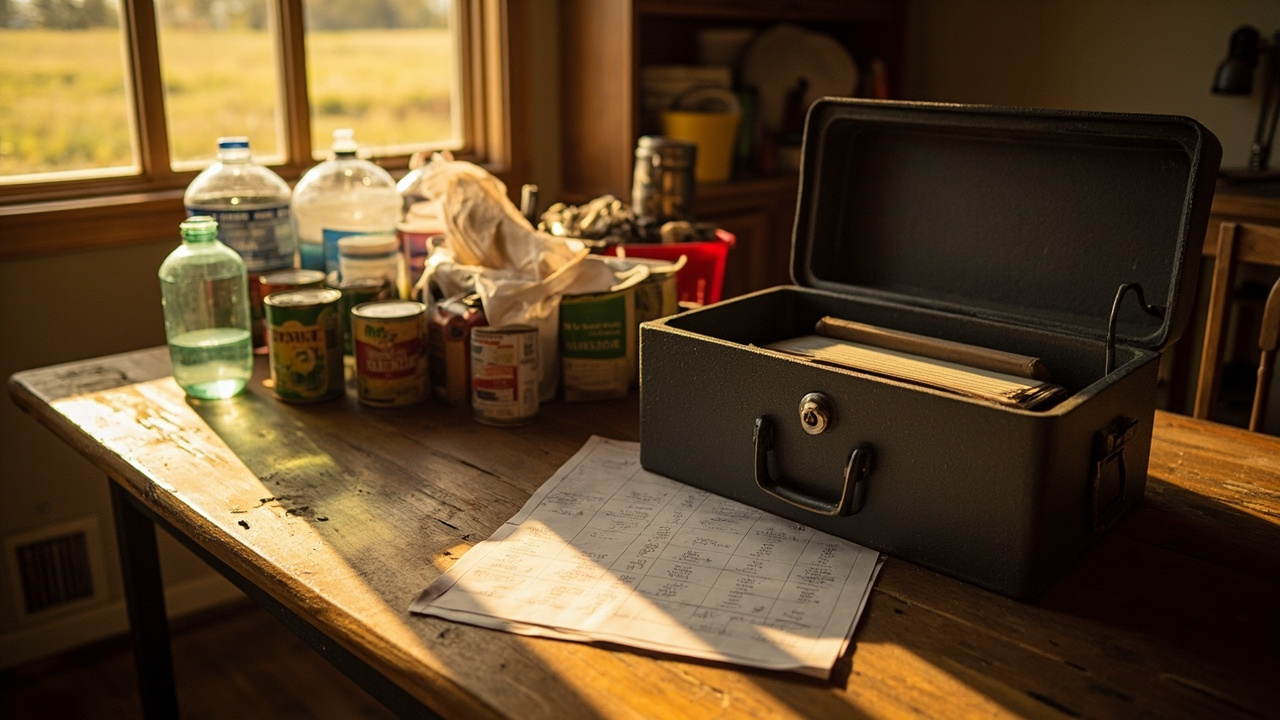
According to WV ReadyWV, a natural or man-made disaster may leave no time to gather emergency contact information, locate important documents, or assemble basic emergency supplies such as medicines, food and water, especially when evacuation must happen quickly. Its guidance is to gather and store needed supplies ahead of time for any type of emergency.
For documents, the office lists home and medical insurance policies, medical information, credit card, bank account and other financial documents as items to copy, according to WV ReadyWV. It advises storing hard copies in a water- and fireproof safe and storing a digital copy in the cloud, with more detail available through its Safeguarding Critical Documents and Valuables resource.
According to the Georgia Emergency Management and Homeland Security Agency, Week 3, Sept. 13–19, is “Build a Kit,” focused on learning what supplies a family will need in a disaster, starting with items already at home such as canned food and first aid supplies.
Free workshop: Greenbrier County, Sept. 22
One in-person option lands in mid-September in West Virginia. According to Lootpress, a free Disaster Preparedness Workshop is scheduled for Tuesday, Sept. 22, from 10:30 to 11:30 a.m. at the Greenbrier County Committee on Aging at 1003 Greenbrier Street in Rupert.
According to Lootpress, the event is hosted by the United Way of Greenbrier Valley and will cover how to prepare an emergency kit, ways to secure finances in the event of a disaster, and steps residents should take following a disaster. Attendees will receive a disaster preparedness bag and light snacks, with raffle prizes offered including a chance to win a solar power station. The outlet describes the workshop as free and aimed at helping residents be better prepared before disasters and other emergencies strike.
Get involved: neighbors and local networks
According to WV ReadyWV, the second half of its September message is “Get Involved in Disaster Preparedness & Relief,” starting with neighbors. It lists three actions: connect by exchanging contact information and creating a neighborhood phone tree; check in by supporting vulnerable neighbors, including elderly or disabled residents, during storms and outages; and learn and practice by hosting first responders at local meetings and running regular fire drills.
According to the National Association of County and City Health Officials, September education and outreach activities hosted by local health departments and Medical Reserve Corps units can promote year-round community vigilance while letting staff and volunteers sharpen preparedness knowledge and facilitation skills. The group also invited health departments planning activities to contact Senior Communications Specialist Beth Hess for possible coverage in its publications.
Volunteer roles for relief work
According to WV ReadyWV, residents who want a formal volunteer role can join national organizations such as the American Red Cross to assist with blood drives, disaster response or medical services. For local work, it names the Salvation Army, Meals on Wheels, local food pantries, community centers or clinics that supply aid during emergencies as places to help.
According to the Georgia Emergency Management and Homeland Security Agency, Week 4, Sept. 20–30, is “Take the Next Step” for residents who want to help the community be more resilient. It suggests considering a training course through FEMA’s Training and Education Program or a local emergency management agency to build or gain skills to protect family, friends and community.
Where to get official forms and help
According to WV ReadyWV, households can start with the office’s Family Emergency Plan, Hazard Specific Fact Sheets, and Safeguarding Critical Documents and Valuables materials. Ready WV lists its office at 803 Quarrier St. Suite 400, Charleston, WV 25301, with phone 304-558-0111.
According to the Georgia Emergency Management and Homeland Security Agency, family and community readiness tools are available at www.gema.georgia.gov/plan-prepare/ready-georgia, with additional preparedness information available from a local EMA director. According to the National Association of County and City Health Officials, community partners can also draw on the 2026 National Preparedness Month Partners Toolkit and Preparedness Month Graphics on Ready.gov.
Sources referenced
- September is National Preparedness Month - Get Prepared, Get Involved! | WV ReadyWV (https://ready.wv.gov/article/september-national-preparedness-month-get-prepared-get-involved)
- National Preparedness Month Begins September 1 | Georgia Emergency Management and Homeland Security Agency (https://gema.georgia.gov/press-releases/2026-08-31/national-preparedness-month-begins-september-1)