TL;DR: For National Preparedness Month 2026, federal officials urge every household to make a written family plan, secure multiple emergency alerts, and assemble a low-cost supply kit starting with food and first aid already at home.
Americans Stand Ready: Federal Campaign Opens September With Three Household Tasks
WASHINGTON — FEMA's Ready Campaign launched National Preparedness Month 2026 on September 1 with the theme "Americans Stand Ready," calling on residents to take charge of their own readiness through three affordable actions: write a household plan that includes pets, arrange multiple ways to receive warnings, and gather emergency supplies over time, according to FEMA Kicks Off National Preparedness Month 2026, Empowers Americans to Stand Ready to Protect Their Loved Ones During Emergencies and Disasters.
The observance, held each September since 2004, frames readiness as civic responsibility and celebrates resourcefulness and self-reliance, the FEMA release states. Release No. HQ-26-118 notes that small steps now can make a large difference later, and it points families to Ready.gov for updated guides and to ready.gov/kit for kit lists tailored to household needs.
"Across this nation, our people are our greatest strength," said FEMA Administrator Cameron Hamilton in the announcement. He added that when residents learn skills to protect families and neighbors, every neighborhood becomes more resilient.
The 2026 effort highlights tornadoes, wildfires and hurricanes as examples of sudden threats where advance planning matters. State agencies are echoing the federal message with weekly schedules and local checklists.
What this year's theme means for your home
According to the 2026 National Preparedness Month Partner Toolkit from FEMA's Ready Campaign, the "Americans Stand Ready" theme centers on three ideas: standing ready to uphold patriotic duty by supporting first responders through personal readiness, standing ready to protect family and friends, and standing ready to help communities become more resilient.
The toolkit, published by the Ready Campaign that has sponsored the September observance for more than 20 years, encourages sharing verified information from official agencies such as FEMA, the National Weather Service, state emergency management offices and local authorities, plus trusted groups such as the American Red Cross. It also advises clear language, actionable steps and regular updates when hazards change.
Georgia officials tied the theme to recent experience. "Preparedness isn't about fearing what could happen; it's about being ready for whatever comes our way," said Georgia Emergency Management and Homeland Security Agency Director Josh Lamb, according to National Preparedness Month Begins September 1 from the Georgia Emergency Management and Homeland Security Agency. That agency noted wildfires earlier in the year showed how fast conditions can shift.
Step 1: Make a written household plan that covers pets and routes
FEMA's first recommended action is to create a plan for the entire household, including pets, so everyone understands what to do, where to go and what will be needed for protection during a disaster, as described in FEMA Kicks Off National Preparedness Month 2026. The guidance asks families to weigh local risks and household needs, identify where they would go if they must leave, and learn evacuation routes in advance.
Ready.gov's Make A Plan page breaks the work into four stages: meet with family, assess household needs, document the plan, and practice it together. The first discussion covers five questions: how alerts and warnings will be received, what the shelter plan is, what the evacuation route is, what the family communication plan is, and whether the emergency kit needs updating.
The assessment stage calls for tailoring arrangements to daily life. Listed factors include ages of household members, duties to assist others, places visited often, dietary needs, medical needs including prescriptions and equipment, disabilities or access and functional needs including devices and equipment, languages spoken, cultural and religious considerations, pets or service animals, and households with school-aged children.
Documentation uses a fillable Family Emergency Plan form that records household information, names and contacts, meeting places and medical details. Ready.gov also offers a Family Communication Plan fillable card, guidance on alerts and warnings, safeguarding documents, insuring property, low- and no-cost preparation, commuter planning, pet owners, and an Emergency Financial First Aid Kit.
Georgia's schedule places this task first. Week 1, Sept. 1-5, is Make a Plan week, focused on getting the household including pets ready and knowing what to do, where to go and what will be needed, according to National Preparedness Month Begins September 1.
Wake County, North Carolina, offers a parallel local model. Its Family Readiness Roadmap, announced September 1, urges families to pick an out-of-town contact for calls or texts, write down key phone numbers where everyone can find them, and agree on a backup meeting spot if members are separated and cannot return home, as reported in Wake County launches readiness roadmap to help families prepare for emergencies.
Step 2: Be informed with several alert paths, not one
The second federal action is to stay informed through redundant warnings. FEMA advises signing up for the community warning system and keeping multiple ways to get alerts because events can develop suddenly, according to FEMA Kicks Off National Preparedness Month 2026. The same release names the Emergency Alert System and National Oceanic and Atmospheric Administration Weather Radio as additional alert sources.
The 2026 National Preparedness Month Partner Toolkit repeats that message, adding evacuation advice: keep evacuation thinking current, always follow local officials, and remember a route may be on foot depending on the disaster type. It also suggests keeping emergency contact cards in wallets and backpacks, including an out-of-state contact who may be easier to reach when local lines are stressed.
State guidance reinforces the layered approach. GEMA/HS assigns Week 2, Sept. 6-12, to Be in the Know, centered on enrolling in the community warning system and maintaining more than one channel for alerts, according to National Preparedness Month Begins September 1. ReadyWV, West Virginia's preparedness program, similarly lists being familiar with likely community hazards, following local news, and enrolling for official alerts and warnings as the first of three basic actions in September is National Preparedness Month, Get Ready WV!.
For households with disabilities, the toolkit notes extra planning may be required because access to a medical facility or drugstore could be limited after a disaster, and it urges planning for daily needs if those supports become unavailable. Some cities and towns operate a voluntary registry where residents with disabilities can self-identify for targeted help; the toolkit directs residents to check a local emergency management or human services office for sign-up details.
Step 3: Build a kit gradually from what you already own
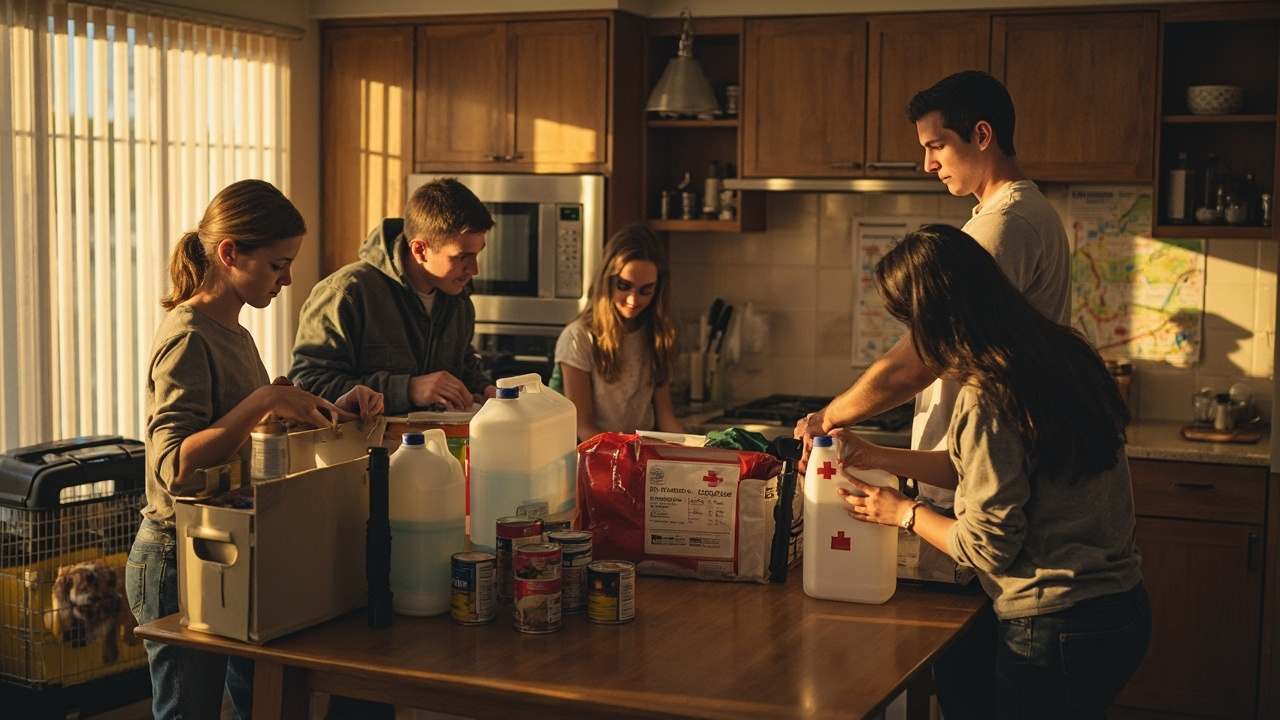
The third federal action is to assemble supplies that keep loved ones safe and comfortable until assistance arrives. FEMA acknowledges many people assume a well-stocked kit is difficult or costly, then notes gathering can happen over time beginning with goods already in the home such as canned food and first aid supplies, according to FEMA Kicks Off National Preparedness Month 2026. The agency refers families to ready.gov/kit for contents and tailoring tips.
Nebraska's emergency management agency issued one of the most specific state lists for the September 1 kickoff. In National Preparedness Month: Prepare Before Disaster Strikes, the Nebraska Emergency Management Agency recommends keeping kits at home, at work and in vehicles, containing at least one gallon of water per person per day for three days, a three-day supply of non-perishable food plus a manual can opener, first aid supplies and necessary medications or medical items for the whole family, a flashlight and extra batteries, phone chargers and a portable power bank, pet supplies, and important family documents kept electronically or in a waterproof, portable container.
"The best time to prepare for an emergency is before it happens," said NEMA Assistant Director Erv Portis in that release. "Taking a few minutes to make a plan and gather essential supplies today can help you and your family respond more safely tomorrow." The agency noted wildfires had significantly affected Nebraska communities during the year and can spread rapidly.
Storage and upkeep matter as much as contents. Nebraska officials advise placing the finished kit in a safe, accessible spot, telling everyone in the home where to find it, and setting aside time to review communication and evacuation choices. For households facing food insecurity, the release points to local community food banks as a possible source of help in piecing together a basic kit.
Georgia places kit-building in Week 3, Sept. 13-19, again starting with items already on hand like canned food and first aid supplies, according to National Preparedness Month Begins September 1. West Virginia adds a financial layer to the same step, urging residents in September is National Preparedness Month, Get Ready WV! to consider an emergency savings account, keep a small amount of cash in a safe place with small bills because ATMs and credit cards may not function, copy financial, personal, household, medical and insurance records into a waterproof or fireproof container or secure cloud storage for claims and assistance applications, and review homeowners, renters, health, life and flood coverage. That article notes most homeowner policies do not include flood coverage and that nearly a third of National Flood Insurance Program claims come from outside the high-risk zone.
Use September's calendar to finish, then help neighbors
Officials stress that readiness does not need to happen at once. GEMA/HS encourages starting small and building over time until preparation becomes part of daily life, with attention to children, older adults, people with disabilities, pets and others who may need extra help, according to National Preparedness Month Begins September 1.
Week 4, Sept. 20-30, is designated Take the Next Step in Georgia: consider a training course through FEMA's Training and Education Program or a local emergency management agency to build skills that protect family, friends and community. Nebraska officials said they would share tips and resources on social media through September and invited residents to follow along.
FEMA also published a free, ready-to-use toolkit with customizable messaging and safety tips so state, local, tribal and territorial agencies, associations, schools, private firms and faith-based and community groups can spread personal preparedness information, as noted in FEMA Kicks Off National Preparedness Month 2026. Families seeking a starting point are directed to Ready.gov and, in Georgia, to the Ready Georgia site for custom plan and kit tools.
Sources referenced
- Make A Plan | Ready.gov (https://www.ready.gov/plan)