TL;DR: The White House issued a Presidential Message on National Preparedness Month on September 2, 2026, calling on citizens, businesses, and state and local governments to build readiness before crisis.
White House message sets September readiness call
The White House released the Presidential Message on National Preparedness Month on September 2, 2026. According to The White House, the message calls on every American citizen to ready themselves and their families, homes, businesses, and communities for natural and man-made threats.
The message states that strength must be built before crisis. According to The White House, preparedness builds that strength, and readiness is the result.
FEMA kicked off the companion public campaign one day earlier. According to FEMA's release FEMA Kicks Off National Preparedness Month 2026, Empowers Americans to Stand Ready to Protect Their Loved Ones During Emergencies and Disasters, the Ready Campaign launched National Preparedness Month 2026 in Washington on September 1, 2026, as Release Number HQ-26-118.
According to FEMA, National Preparedness Month has been observed since 2004 to encourage Americans to prepare for emergencies. The agency said September is a time to take small steps that make a large difference and to promote preparedness in communities.
This year's theme is Americans Stand Ready. According to FEMA, the theme empowers individuals to take charge of their own readiness and celebrates American resourcefulness, self-reliance and resilience.
Understand risks first, then protect home and property
The Presidential Message says readiness begins with understanding the risks that matter most. According to The White House, Americans can take practical steps before a crisis to protect homes and property.
Those household steps listed in the message include purchasing affordable insurance against the risks they face. According to The White House, families can also learn evacuation routes, maintain an emergency kit with essential supplies, and stay informed through trusted local news and real-time alerts.
The message describes those actions as simple investments. According to The White House, the investments save lives, protect livelihoods, and help families and communities return to normal.
FEMA's guidance aligns household planning with local conditions. According to FEMA, families should consider the unique risks where they live and the needs of their family when making a plan.
For households with animals, FEMA includes pets in the planning checklist. According to FEMA, a household plan helps family members know what to do, where to go, and what they will need to protect themselves during a disaster.
Make a household plan and learn evacuation routes
FEMA's Ready Campaign lists making a plan as one of three simple, affordable steps to stand ready. According to FEMA, families should decide where they will go if they need to leave home and learn evacuation routes so they can get there safely.
The White House message separately lists knowing evacuation routes among the pre-crisis actions for citizens. According to The White House, route awareness sits alongside home protection, insurance, emergency kits, and staying informed.
FEMA frames early planning as a way to reduce confusion during a sudden event. According to FEMA, disasters can happen suddenly, and planning helps households know actions, destinations, and needed supplies.
The agency points households to additional resources online. According to FEMA, people can visit Ready.gov for updated resources and to learn how to start a disaster preparedness journey, and can visit ready.gov/kit for a list of kit items and directions on tailoring a kit to family needs.
Organizations are invited to amplify the same information. According to FEMA, state, local, tribal and territorial agencies, as well as associations, academic institutions, private sector, faith-based and community organizations can promote personal preparedness information within their communities.
FEMA also published support material for those partners. According to FEMA, the agency published a free, ready-to-use toolkit with customizable preparedness messaging and safety tips to help spread the word.
Stay informed with local news and multiple alerts
Staying informed is a central pillar in both announcements. According to The White House, Americans should stay informed through trusted local news and real-time alerts.
FEMA's second listed step is to be in the know. According to FEMA, residents should sign up for their community's warning system and maintain multiple ways to get alerts.
The agency names two national alert sources in addition to local systems. According to FEMA, the Emergency Alert System and National Oceanic and Atmospheric Administration Weather Radio also provide emergency alerts.
FEMA connects alert awareness to tornadoes, wildfires, and hurricanes. According to FEMA, in the face of disasters like tornadoes, wildfires and hurricanes, Americans can take simple, practical steps to keep themselves and their families safe.
The agency ties individual action to national strength. According to FEMA, by proactively preparing, Americans make the nation stronger and more resilient.
Build a kit over time from supplies on hand
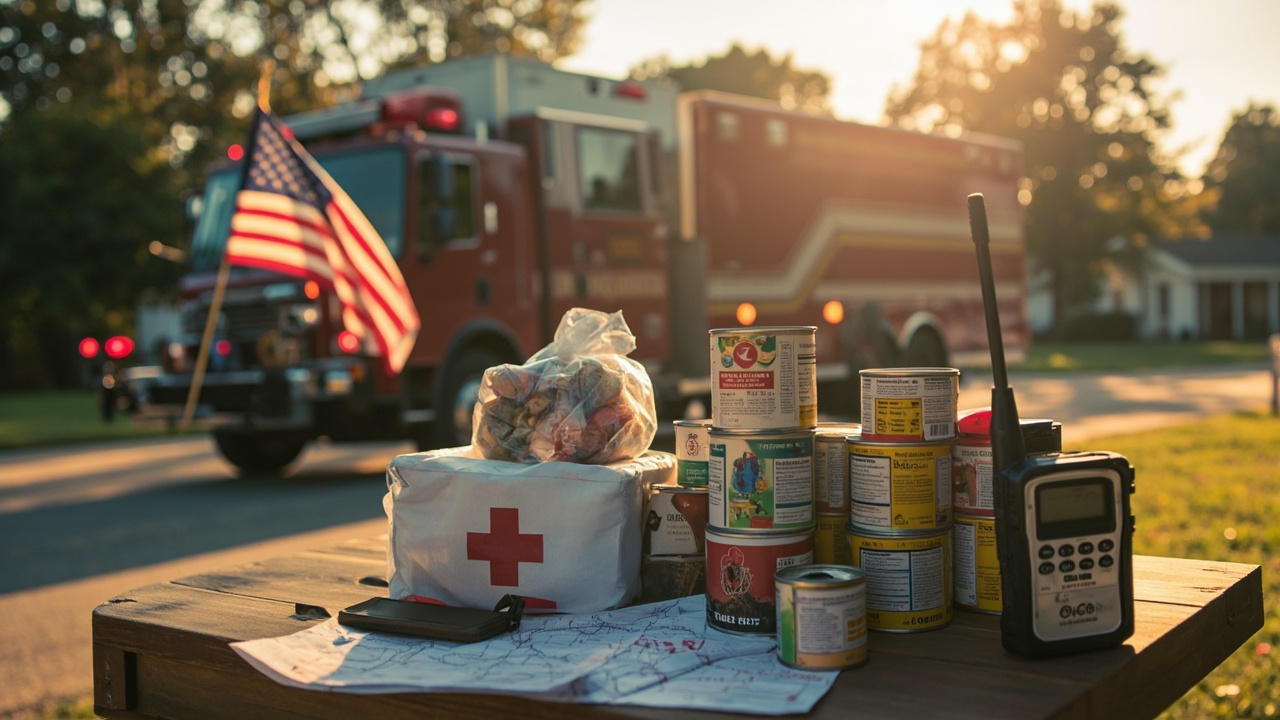
Maintaining an emergency kit appears in both the White House and FEMA messages. According to The White House, Americans should maintain an emergency kit with essential supplies before a crisis.
FEMA's third listed step is to build a kit sufficient to stay safe and comfortable until help arrives. According to FEMA, building a well-stocked emergency kit does not need to be difficult or expensive.
The agency recommends incremental assembly. According to FEMA, residents can gather supplies over time, starting with items they may already have at home like canned food and first aid supplies.
FEMA Administrator Cameron Hamilton linked family-level steps to neighborhood resilience. “When Americans take steps to prepare for disasters and keep their families safe, every neighborhood and community is more resilient,” Hamilton said, according to FEMA.
Hamilton also described the public as the nation's core asset. “Across this nation, our people are our greatest strength,” Hamilton said, according to FEMA.
Critical systems must stay available through crisis
The Presidential Message extends readiness beyond households to businesses and infrastructure operators. According to The White House, American businesses and operators of critical infrastructure have an essential role and must also be ready.
The message names seven systems that support daily life. According to The White House, the energy, communications, transportation, financial, water, food, and health systems that power American life must remain available when they are needed most.
The Administration described ongoing work on system reliability. According to The White House, the Administration is working to strengthen the reliability of those systems, secure vital supply chains, reduce dangerous dependencies, and ensure services continue operating through crisis.
That infrastructure focus matches the household message. According to The White House, the same principle that applies to families applies to the systems that power the Nation.
National Resilience Strategy and state-local roles
The message cites a strategy issued earlier in the summer. According to The White House, on June 23, 2026, the President issued the National Resilience Strategy that articulates how the Nation, through federalism, will achieve a readiness posture.
The message describes a continuing shift in emergency management. According to The White House, the Administration continues transforming emergency management in the United States around readiness, responsibility, and results.
States and communities are assigned a direct part in that transformation. According to The White House, states and communities must participate by building their own fiscal and operational capacity to manage the emergencies they routinely face and support one another through mutual aid.
The message links mutual aid to speed. According to The White House, mutual support can drastically speed up deployment and delivery of critical resources when disaster strikes.
The message sets an expectation for local performance. According to The White House, Americans deserve state and local governments that respond quickly to their needs, enabling communities to rebuild stronger and more resilient than ever before.
Federal resources would then focus on the largest events. According to The White House, that approach allows the Federal Government to concentrate its resources on the greatest risks and catastrophic incidents, regionally or nationally.
Readiness as security and tribute to responders
The message connects domestic functioning during crisis to national security. According to The White House, the shift also makes the country harder to threaten.
It explains the security logic in functional terms. According to The White House, when America functions through crisis, adversaries have fewer opportunities to harm the country and fewer opportunities to achieve their objectives.
The September observance also honors emergency workers. According to The White House, the month honors brave first responders, law enforcement officers, emergency personnel, and selfless volunteers.
The message describes their response when an alarm sounds. According to The White House, they do not hesitate, they answer the call, protect fellow Americans, and help keep communities and the Nation safe and secure.
FEMA places the same ethic in civic terms. According to FEMA, this year's theme highlights preparedness as a civic responsibility and patriotic duty and celebrates the self-reliant, resourceful spirit of the American people.
The message closes with a joint resolve. According to The White House, together Americans resolve to build a more prepared, ready, and resilient America.