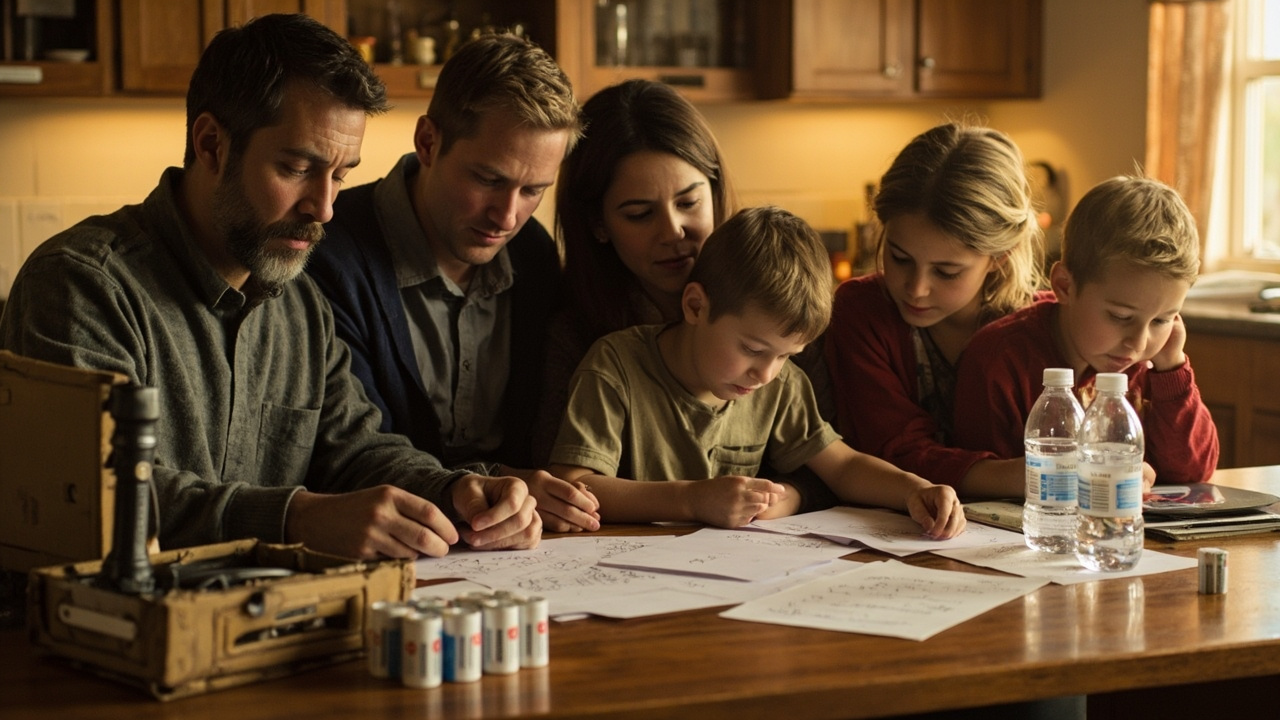
TL;DR: Norfolk families should use September National Preparedness Month to write a household plan covering alerts, meeting spots, contacts, evacuation or shelter-in-place steps, supplies, and needs of children, pets, older adults and members with special needs.
Why September 10 Is the Day to Start
The Norfolk Health Department posted "Make a Plan with Your Family!" on September 10, 2026, according to the Norfolk Health Department, and the page shows a last update of September 10, 2026.
The Norfolk Health Department states that September is National Preparedness Month, making it a great time to talk with your family about what you would do in an emergency.
The Norfolk Health Department states that emergencies can happen with little or no warning.
The Norfolk Health Department states that having a plan ahead of time can help reduce confusion, keep everyone informed, and make it easier to respond when it matters most.
The Norfolk Health Department closes that September 10, 2026 message with four actions: Make a plan. Build a kit. Stay informed. Be ready.
The American Red Cross published "Is Your Disaster Preparedness Kit Missing Something? It's Not Just Supplies. It's Lifesaving Skills." on September 10, 2026, according to the American Red Cross.
That American Red Cross article states, "A well-stocked emergency kit can help sustain a household. A trained person can help save a life."
The author identified by the American Red Cross is Dr. Matthew Levy, described as a veteran disaster medical responder with nearly three decades of field experience, an emergency medicine and EMS physician, and medical director for Red Cross Training Services.
The American Red Cross article states that when most people think about disaster preparedness, they think about bottled water, flashlights, batteries, generators and evacuation plans.
The American Red Cross article states that those preparations matter.
The American Red Cross article states that one of the most important preparedness tools is often overlooked: people who know how to administer lifesaving skills.
How Your Household Will Get Emergency Information
Decide on alerts before you need them
The Norfolk Health Department instructs families to sit down together and discuss how you will receive emergency information.
The Norfolk Health Department presents receiving emergency information as the first discussion item for starting a family preparedness plan.
The Norfolk Health Department advises families to be sure everyone in the household understands the plan, including children.
The Norfolk Health Department advises families to review the plan regularly and update contact information and emergency supplies as family needs change.
The American Red Cross article states that disasters place extraordinary strain on communities.
The American Red Cross article lists roads that can become impassable, power outages that can disrupt critical infrastructure, communications systems that can fail, and emergency responders that can be stretched thin across multiple crises.
The American Red Cross article states that in those moments, professional help may be delayed, leaving neighbors, friends and family members as the true first responders.
Households that decide in advance how they will receive emergency information can reduce confusion when roads are impassable, power is disrupted, communications fail, or responders are stretched, using only conditions described by the two sources.
Where to Meet and How to Contact Each Other
Separation plan and contact plan
The Norfolk Health Department instructs families to discuss where you will meet if you are separated.
The Norfolk Health Department instructs families to discuss how you will contact one another.
The Norfolk Health Department frames both the meeting location and the contact method as core household decisions to make by sitting down together.
The Norfolk Health Department advises that everyone in the household understands the plan, including children, which applies to the meeting place and contact approach.
The Norfolk Health Department advises regular review and updates to contact information as family needs change.
The American Red Cross description of failed communications systems and delayed professional help underscores why the Norfolk Health Department places contact planning and a separation meeting place in the same family discussion.
A household meeting place answers the separation question identified by the Norfolk Health Department.
A household contact method answers the contact question identified by the Norfolk Health Department.
Updating contact information when family needs change keeps the contact answer current, as instructed by the Norfolk Health Department.
What to Do for Evacuation or Shelter in Place
Two protective actions, one family decision
The Norfolk Health Department instructs families to discuss what you should do if you need to evacuate or shelter in place.
The Norfolk Health Department lists evacuation and shelter-in-place action as a distinct discussion item alongside information, meeting, contact, supplies, and needs of children, pets, older adults and members with special needs.
The American Red Cross article states that bottled water, flashlights, batteries, generators and evacuation plans are common disaster preparedness associations, and that those preparations matter.
Evacuation planning therefore connects the Norfolk Health Department instruction to discuss evacuation with the American Red Cross statement that evacuation plans matter.
Shelter-in-place planning connects the Norfolk Health Department instruction to discuss sheltering in place with the American Red Cross description of impassable roads, disrupted infrastructure, failed communications, and stretched responders during disasters.
The Norfolk Health Department states that a plan made ahead of time can help reduce confusion, keep everyone informed, and make it easier to respond when it matters most, which applies to both evacuation and shelter-in-place decisions.
The Norfolk Health Department directs households to ensure understanding by everyone in the household, including children, and to review regularly.
What Supplies Your Family May Need
Build a kit around household needs
The Norfolk Health Department instructs families to discuss what supplies your family may need.
The Norfolk Health Department instructs families to update emergency supplies as family needs change.
The Norfolk Health Department includes "Build a kit" among its four closing actions, alongside make a plan, stay informed, and be ready.
The American Red Cross states that a well-stocked emergency kit can help sustain a household.
The American Red Cross lists bottled water, flashlights, batteries, and generators among items people associate with disaster preparedness, and states that those preparations matter.
A household supply discussion can therefore start with bottled water, flashlights, batteries, generators, and evacuation plans because those are the examples the American Red Cross states matter.
Updating emergency supplies as family needs change keeps the kit aligned with the household, as instructed by the Norfolk Health Department.
Staying informed keeps the supply decisions current, consistent with the Norfolk Health Department instruction to stay informed and the Norfolk Health Department instruction to discuss how emergency information will be received.
How to Plan for Children, Pets, Older Adults and Special Needs
No household member left out of the plan
The Norfolk Health Department instructs families to discuss how you will prepare for children, pets, older adults, and family members with special needs.
The Norfolk Health Department separately states to be sure everyone in the household understands the plan, including children.
The Norfolk Health Department advises review and updates as family needs change, which includes changing needs of children, pets, older adults, and members with special needs.
The American Red Cross article describes disaster preparedness challenges that affect vulnerable people and household health decisions.
A large review led by Harvard Medical School researchers, as described by the American Red Cross, found that extreme heat, hurricanes, tropical storms and other climate-related weather events are associated with increased cardiovascular disease risk, particularly among older adults, low-income communities and other vulnerable populations.
The American Red Cross lists physical strain, psychological stress, smoke exposure, disruptions in healthcare access and interruptions in medication management as contributing factors identified in that review context.
A study examining 31 years of U.S. tropical cyclones and hurricanes, as described by the American Red Cross, found that cardiovascular disease remained the leading cause of death among affected populations.
The American Red Cross states that cardiovascular deaths peaked during the month a hurricane occurred and the month following a tropical cyclone.
The American Red Cross states that the risk also increased with each additional storm affecting a community, suggesting that locations repeatedly exposed to severe weather may face growing health consequences over time.
Households planning for older adults and members with special needs can include healthcare access and medication management in the discussion because the American Red Cross lists disruptions in healthcare access and interruptions in medication management among contributing factors.
Why Training Is Part of the Family Plan
CPR, AED and First Aid during delayed response
The American Red Cross article states that CPR, AED and First Aid training are essential components of disaster preparedness.
The American Red Cross article states that disasters are not only emergency management and logistical challenges, but also major public health events.
The American Red Cross states that sudden cardiac arrest does not pause during a disaster.
The American Red Cross states that the circumstances surrounding a disaster can make an emergency even more challenging to manage.
The American Red Cross states that knowing what to do and being willing to act can make the difference while first responders are on their way.
The American Red Cross states that immediate action can triple the chance of survival after a sudden cardiac arrest.
The American Red Cross states that without immediate action, survival rates drop by 10% every single minute.
The American Red Cross states that under normal circumstances, emergency medical services reach a patient an average of about seven minutes after dispatch.
The American Red Cross states that in rural communities, response times average roughly 13 minutes and can exceed 26 minutes in some cases.
The American Red Cross states that during a disaster, response is potentially even longer.
The American Red Cross states that in those critical minutes, bystanders may be the only source of immediate care.
The American Red Cross lists examples where bystanders may need to help: controlling severe bleeding, caring for wounds, recognizing and responding to a serious allergic reaction, treating dehydration, identifying heat-related illnesses such as heat exhaustion, or assisting someone experiencing breathing difficulties due to poor air quality or wildfire smoke.
The American Red Cross states that First Aid skills can help stabilize an individual and prevent a medical emergency from becoming a tragedy.
The American Red Cross states that wildfire smoke contains fine particles that can penetrate deep into the lungs and enter the bloodstream, contributing to respiratory and cardiovascular health risks.
The American Red Cross states health effects that can persist long after a disaster has ended, particularly in communities repeatedly exposed to wildfire smoke.
The American Red Cross states that preparedness is not just about surviving the disaster itself, but about protecting health during the emergency and throughout recovery.
The American Red Cross states that community resilience is built not only through infrastructure and emergency plans, but through people.
Preparedness starts with a conversation
The Norfolk Health Department states that preparedness starts with a conversation.
The Norfolk Health Department urges families to take time this National Preparedness Month to make a plan with family.
The Norfolk Health Department states that a few minutes of preparation today can make a big difference during an emergency.
The Norfolk Health Department lists the family discussion as sitting down together to cover emergency information, meeting if separated, contacting one another, evacuating or sheltering in place, needed supplies, and preparation for children, pets, older adults and members with special needs.
The Norfolk Health Department directs that review be regular and that contact information and emergency supplies be updated as family needs change.
Sources referenced
- Make a Plan with Your Family! - Norfolk Health Department (https://www.vdh.virginia.gov/norfolk/2026/09/10/make-a-plan-with-your-family/)
- Is Your Disaster Preparedness Kit Missing Something? It’s Not Just Supplies. It’s Lifesaving Skills. - American Red Cross (https://www.redcross.org/about-us/news-and-events/news/2026/is-your-disaster-preparedness-kit-missing-something-.html)