TL;DR: PNG Power says outage restoration follows confirm, identify, isolate, repair or switch, and test steps, with timing driven by fault cause, repair needs, and site access.
What PNG Power’s Sept. 9 guidance covers
On September 09, 2026, PNG Power customer care published the guide titled Power Outage Restoration FAQs – PNG Power, authored by James Wila. According to Power Outage Restoration FAQs – PNG Power, the article explains what happens when an outage affects an area, how PNG Power responds, and what households can expect while restoration work is underway. The guide acknowledges that losing power for several hours can be frustrating. It states that technical teams work to restore supply as quickly and safely as possible.
For household preparedness, that framing matters because it sets two expectations at once. Supply return is the goal, and safe return is the condition. According to Power Outage Restoration FAQs – PNG Power, residents should allow time for safety checks and fault repairs because completion time depends on the nature of the issue. The article also states that teams are working to locate and rectify the fault to restore power supply as soon as possible. In practical terms, families should plan for several hours without grid power rather than assuming a brief interruption.
What happens when an outage is reported or detected
According to Power Outage Restoration FAQs – PNG Power, once an outage is reported or detected, PNG Power technical teams begin investigating the cause. The investigation may involve checking the network. It may involve locating the fault. It also involves assessing whether the issue was caused by equipment damage, weather, vegetation, or another supply interruption.
Those four cause categories help households understand why neighboring outages can feel different. Equipment damage can require parts and hands-on repair. Weather can affect more than one span of line and complicate travel. Vegetation contact can require clearing before re-energizing. Another supply interruption can involve conditions upstream of the local distribution area. According to Power Outage Restoration FAQs – PNG Power, the early task is to narrow the location and cause before crews commit to a repair or switching action.
The five-step restoration sequence
According to Power Outage Restoration FAQs – PNG Power, technical teams follow a restoration process intended to return electricity safely to affected areas. The listed process may include confirming the outage location. It may include identifying the fault. It may include isolating the affected section of the network. It may include carrying out repairs or switching supply where possible. It may include testing the network before restoring power.
Confirming location prevents crews from working the wrong section. Identifying the fault defines whether repair, replacement, clearing, or switching is appropriate. Isolating the affected section protects workers and limits risk to the wider network. Repairs or alternate switching restore a path for electricity where possible. Testing checks the network before full restoration. According to Power Outage Restoration FAQs – PNG Power, households should allow some time for completion because safety checks and fault repairs can take time depending on the issue.
That sequence also explains why power can return in stages. Isolation lets crews make one area safe while another remains de-energized for work. Switching supply where possible can restore some customers earlier without waiting for every repair to finish. Testing before restoration reduces the chance that a hidden fault causes an immediate second outage. According to Power Outage Restoration FAQs – PNG Power, the process is intentionally ordered around safety rather than speed alone.
How long restoration takes
According to Power Outage Restoration FAQs – PNG Power, restoration time depends on the cause and complexity of the fault. Some outages may be restored quickly. Others may take longer if repairs are needed. Others may take longer if equipment replacement is needed. Others may take longer if access to the affected area is required.
Access is an important preparedness factor in Papua New Guinea’s service territory. Steep terrain, wet roads, river crossings, distance from depots, and storm debris can delay arrival even after the fault is understood. Equipment replacement adds procurement and transport time beyond a simple reset or switch. Complex faults can require isolation, repair, and testing across multiple sections. According to Power Outage Restoration FAQs – PNG Power, PNG Power teams are working to locate and rectify the fault to restore supply as soon as possible, but the guide does not promise a fixed window.
Households should therefore treat duration as uncertain. The guide’s language points to quick return in simpler cases and longer return when repair, replacement, or access is involved. According to Power Outage Restoration FAQs – PNG Power, if power has not returned after a reasonable period, customers should continue monitoring updates from PNG Power and contact customer support for further assistance. The guide states that teams remain committed to restoring supply safely and efficiently.
Why wider grid conditions matter for local outages
Local restoration does not occur apart from generation and transmission conditions. The Post-Courier investigation titled Power versus Gold reported that PNG Forest Products hydroelectric stations in the Bulolo district faced damage risks from silt and sediment associated with upstream alluvial mining. According to Power versus Gold, vital components in its largest producing station were being damaged continuously by silt and sediments from mining upstream of its main intake. The report warned of consequences for the national Ramu grid if authorities did not address the issue.
According to Power versus Gold, shutdowns of the largest producing plant to clean its water intake could last four hours or more when supply was interrupted. The article described potential effects across Morobe, Madang, and parts of the Highlands. It also reported that the affected supply represented a substantial share of electricity into the industrial area around Lae. For preparedness, the lesson is that an outage notice may reflect local distribution damage, upstream generation limits, or a combination of pressures on the same grid.
Longer-term grid work is also part of the context. The report titled NEW HIGHLANDS TRANSMISSION LINE TO BE COMMISSIONED TODAY described a 132kV Highlands Transmission Line project centered at Keltiga Substation in Mt Hagen. According to that report, the corridor runs approximately 189 kilometres from Mt Hagen to Tari and is supported by around 448 transmission towers across highland terrain. It includes substations at Keltiga, Kaupena/Pauanda, Mendi, and Tari, plus a Tari–Hides extension of approximately 40 kilometres for integrating generation from the Hides area. The project upgrades the historic 66kV corridor to a 132kV backbone to carry larger volumes with improved reliability and reduced technical losses.
How to report an outage to PNG Power
According to Power Outage Restoration FAQs – PNG Power, customers whose area remains without power should report the outage if it has not already been reported. Contact should go through the usual customer support channel or outage reporting line. The report should include location details. It should include helpful observations such as when the outage started. It should also include whether nearby areas are also affected.
Those three details help triage. Location tells crews where to start confirmation. Start time helps distinguish a new fault from an ongoing event. Information about nearby areas helps determine whether the problem is isolated to one premises, one street, or a broader network section. According to Power Outage Restoration FAQs – PNG Power, repeat reporting is useful when an outage has not already been reported, while continued monitoring of PNG Power updates is appropriate when restoration is already underway.
What households should do while crews work
According to Power Outage Restoration FAQs – PNG Power, households can help during restoration by reporting an unreported outage. They can help by staying away from fallen lines, damaged poles, or exposed electrical equipment. They can help by turning off sensitive appliances to protect them when power returns. They can help by keeping torches and emergency supplies ready if needed. They can also help by following safety instructions issued by PNG Power or local authorities.
Turning off sensitive appliances is especially relevant where restoration may involve switching or testing. Power can return, drop, and return again while crews verify the network. Keeping torches and emergency supplies ready reduces movement in dark rooms, stairways, and outdoor areas. Reporting remains important because crews may not know that a smaller pocket remains out after a larger section returns. Following official safety instructions keeps residents clear of work zones and energized equipment.
Safety rules around damaged electrical equipment
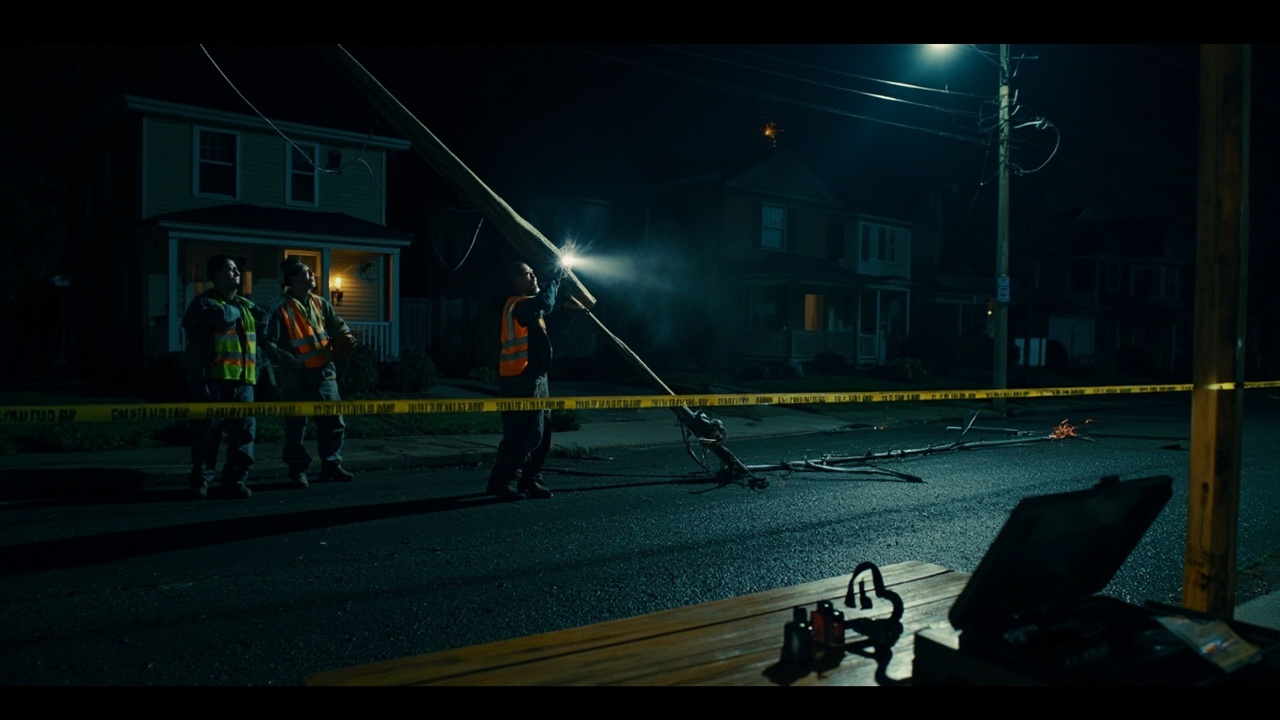
According to Power Outage Restoration FAQs – PNG Power, all fallen or damaged electrical equipment should be treated as live and dangerous. Residents should not attempt to touch, move, or repair electrical lines or equipment. Children and others should be kept away from the affected area. Households should wait for PNG Power technical teams to attend.
That rule applies even when equipment looks inactive. A line on the ground can become energized through switching, backfeed, or contact with another conductor. A leaning pole can shift without warning. Exposed equipment can retain hazardous conditions after visible arcing stops. According to Power Outage Restoration FAQs – PNG Power, the required household action is distance, supervision of children, and waiting for trained technical personnel rather than attempting self-help.
Monitoring updates and asking for further help
According to Power Outage Restoration FAQs – PNG Power, customers should continue monitoring updates from PNG Power if supply has not been restored after a reasonable period. They should contact customer support for further assistance. The guide states that teams are committed to restoring supply safely and efficiently.
For emergency planning, monitoring has two functions. It tells households whether crews have identified the fault and moved into repair, isolation, switching, or testing. It also helps households decide when to preserve phone charge, conserve water pumped by electricity, adjust food storage, or arrange temporary shelter. According to Power Outage Restoration FAQs – PNG Power, the combination is straightforward: report with location and timing details, stay clear of hazards, protect sensitive appliances, keep torches and emergency supplies ready, follow official instructions, and seek support again if restoration extends beyond a reasonable period.
Sources referenced
- Power versus Gold - Post Courier (https://www.postcourier.com.pg/power-versus-gold/)