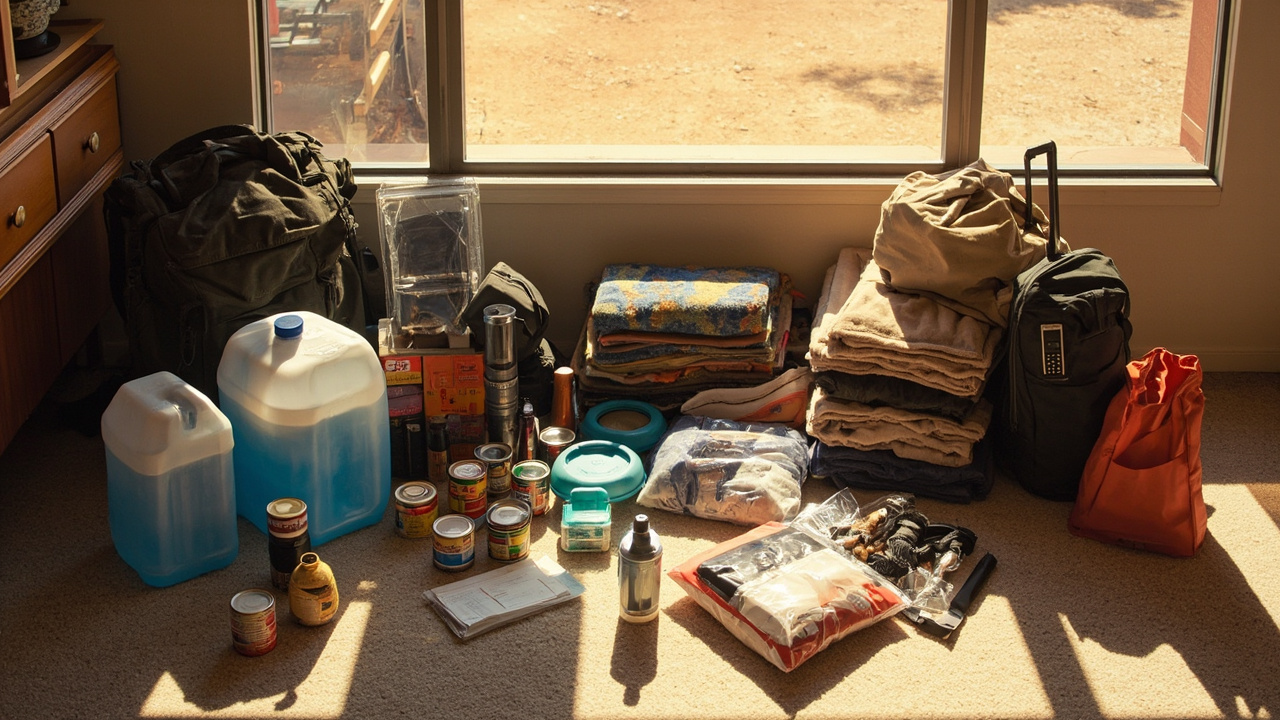
TL;DR: San Diego County officials urged residents on Oct. 2, 2026 to keep go-kits that sustain each person and pet for at least 72 hours, plus a two-week medicine supply, as extreme heat, Santa Ana winds, fire risk and possible SDG&E shutoffs threatened the region.
Why San Diego County issued the go-kit alert
According to the San Diego County News Center article "Build Your Emergency Go Kit and One for Fido Too!", County officials encouraged everyone to have emergency go-kit supplies on hand because forecasted extreme heat and Santa Ana winds were elevating fire risk and possible San Diego Gas & Electric power shutoffs. The message was published by Donna Durckel of the County of San Diego Communications Office on Oct. 2, 2026, at 5:26 p.m., with video by County Communications. Contact information listed for follow-up was the County Communications Office at [email protected] and 619-595-4633.
The Golden Coast Journal report "San Diego County urges residents to build emergency go kits and one for pets" summarized the same county advisory on Oct. 2, 2026, at 6:07 p.m. PDT. That summary stated that forecast extreme heat and Santa Ana winds raised fire risk and could lead to SDG&E power shutoffs, which was why residents were told to prepare now.
The core household target in the county advisory was sustainment for a minimum of 72 hours for residents, family members and pets. The county also recommended a two-week supply of prescription and necessary over-the-counter medications. Residents were told to review the basic list and consider where they live and their unique needs to create a tailored emergency supply kit.
How much to store and where to keep it
The 72-hour and two-week benchmarks
The county set a minimum 72-hour sustainment benchmark for people and pets. Water and non-perishable food were listed for several days. A two-week supply was the recommended level for prescription medications and necessary over-the-counter medications.
One full kit plus portable kits
The county advised individuals to consider having at least three emergency supply kits. The structure described was one full kit at home and smaller portable kits in the workplace, vehicle or other places where people spend time. The Golden Coast Journal summary of the advisory repeated that three-location approach of one full home kit and smaller portable kits at work and in vehicles.
Tailor the kit to place and person
The county said it was important for individuals to review the basic-item list and consider where they live and their unique needs. That tailoring point applied to household composition, health needs, infants, pets and documents. Residents were directed to download a printable emergency supplies list and to learn more about preparing for emergencies at the county's El Niño Hub.
Basic go-kit checklist for every household
Water, food and opening cans
The basic list started with water and non-perishable food for several days. A can opener was included on the basic list for kits that contain canned food. Pet food, water and supplies for pets were named in the extended list, so animal water and food were part of household sustainment rather than an afterthought.
Power, light and information
The basic list named an extra cell phone battery or charger. It also named a flashlight and extra batteries. For information during an outage, the county listed a battery-powered or hand crank radio that can receive NOAA Weather Radio tone alerts and extra batteries. Local maps were also on the basic list.
Safety, shelter-in-place and signaling
The basic list named a dust mask to help filter contaminated air. It named a first aid kit. For shelter-in-place, the county listed plastic sheeting and duct tape. For signaling, the county listed a whistle to signal for help. For utility control, the county listed a non-sparking wrench or pliers to turn off utilities.
Sanitation supplies
For personal sanitation, the basic list named moist towelettes, garbage bags and plastic ties. The extended list added feminine supplies, personal hygiene items and hand sanitizer. Paper towels were also named in the extended household section alongside paper cups, plates and disposable utensils.
Extended items for health, infants and documents
Medications, glasses and infant needs
The additional-items section listed prescription medications and glasses. Infant formula and diapers were listed for households with infants. The two-week medication recommendation covered prescription and necessary over-the-counter medications.
Waterproof documents, cash and change
The county listed important family documents such as copies of insurance policies, identification and bank account records in a portable waterproof container. Cash and change were listed as an additional item. Paper and pencil were listed alongside books, games, puzzles or other activities for children.
Sleep, clothing and warmth
The extended list named a sleeping bag or warm blanket for each person. It named a complete change of clothing including a long sleeved shirt, long pants and sturdy shoes. Those clothing details were specified by the county for the additional kit.
Fire tools and camp kitchen
The extended list named a fire extinguisher. It named matches in a waterproof container. It named mess kits. It also named paper cups, plates and disposable utensils, plus paper towels.
Build one for Fido too
Pet food, water and supplies
Pet food, water and supplies for pets were explicitly listed by the county as additional items to consider adding to an emergency supply kit. The 72-hour sustainment benchmark was stated to cover family and pets. That meant a pet kit needed the same several-day planning horizon as the human kit.
Keep pet needs with the family plan
Because the county told residents to tailor kits to unique needs, a household with dogs, cats or other animals needed to account for species, size, diet and daily routine in the pet portion. The county's three-kit guidance also applied to pet planning, with one full kit at home and smaller portable kits in the workplace, vehicle or other places people spend time. A person who travels with a pet or leaves a pet at home during work hours needed supplies in more than one location.
Documents and control items for animals
The county's document guidance called for copies of insurance policies, identification and bank account records in a portable waterproof container. For pet-owning households following that same structure, animal identification and care records belonged in waterproof storage with family papers. Leashes, carriers and control supplies fit the county's broader point about considering unique household needs, although the county checklist itself used the phrase pet food, water and supplies for your pet.
What to download and where to learn more
The county said residents can download a printable emergency supplies list. It pointed residents to the county's El Niño Hub to learn more about preparing for emergencies. The Golden Coast Journal summary repeated both directions, noting the printable supplies list and the El Niño Hub for more information.
Households that had not yet assembled kits were told to start with the basic twelve categories, then add health, infant, pet, document, clothing, warmth, fire, kitchen and children's activity items. Workplaces and vehicles needed smaller portable versions rather than duplicates of the full home kit. Medications required the longest horizon at two weeks, while water, food and pet sustainment were framed around several days with a 72-hour minimum.
Sources referenced
- Build Your Emergency Go Kit and One for Fido Too! | News | San Diego County News Center (https://www.countynewscenter.com/build-your-emergency-go-kit-and-one-for-fido-too/)
- San Diego County urges residents to build emergency go kits and one for pets | The Golden Coast Journal (https://www.goldencoastjournal.com/article/san-diego-county-urges-residents-to-build-emergency-go-kits-and-one-for-pets-fe3690)