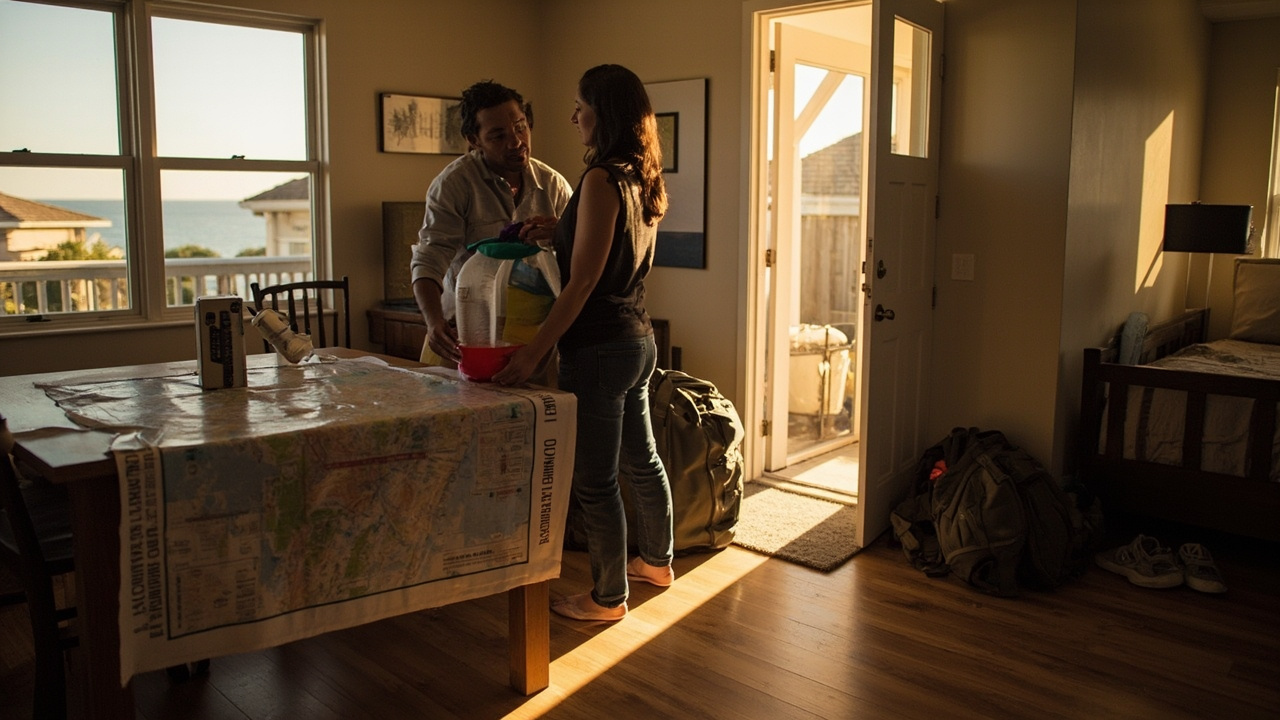
TL;DR: Solana Beach's Week 3 guide for Sept. 17, 2026 tells households to practice a written family evacuation plan and be ready to be on their own for at least the first 72 hours after a major disaster.
The City of Solana Beach published its Week 3 preparedness notice on Sept. 17, 2026, under the heading Emergency Preparedness Week 3: Family Evacuation Plan, according to Emergency Preparedness Week 3: Family Evacuation Plan | Solana Beach. The notice states that after a major disaster, emergency response services are unlikely to be able to immediately respond to everyone's needs. It advises residents to be prepared to take care of themselves and their families. It states that creating and practicing a family evacuation plan now can help everyone respond quickly and confidently. The central household benchmark in the notice is to plan to be on your own for at least the first 72 hours.
The same city notice points residents to two downloadable planning documents. It directs households to FEMA's Make a Plan guide and to the Personal Disaster Plan published by the County of San Diego Office of Emergency Services, according to Emergency Preparedness Week 3: Family Evacuation Plan | Solana Beach. That pairing connects a federal planning template with a county-level personal disaster form for San Diego County residents.
Pick an out-of-state check-in person
The Week 3 notice lists designating an out-of-state contact person as a preparedness step. It recommends trying to pick someone far enough away to not be affected by the same emergency. It directs households to provide that person with the names and contact information of the people they want to keep informed of their situation. It instructs family members to call this person and tell them where they are.
That contact concept also appears in statewide and national September messaging. The City of Asheville's Sept. 16, 2026 preparedness notice states that a family may not be together if a disaster strikes, so it is important to know how members will contact one another and reconnect if separated, according to September is Emergency Preparedness Month: Make a Plan - The City of Asheville. Asheville's notice frames its tips as links from Ready.Gov, described there as a national public service campaign managed by the U.S. Department of Homeland Security and FEMA that helps people prepare for, respond to, and recover from emergencies and natural disasters.
Copy documents and list valuables before you need them
Solana Beach's Week 3 material advises households to duplicate important documents and inventory valuables in writing and with photographs or video. It advises keeping copies of those items off-site, either in a safety deposit box or with someone trusted. The document types named for duplication include birth certificate, passport, driver's license, Social Security card, wills, marriage statement, deeds, financial statements, credit cards, insurance information, and prescriptions.
Asheville's companion planning outline adds a documentation step called Document Your Plan, according to September is Emergency Preparedness Month: Make a Plan - The City of Asheville. That city points to a fillable Make a Family Emergency Plan form. The form is described as a place to include household information, names and contacts of family members, meeting places, and medical information.
Give each room a disaster check
The Solana Beach notice tells residents to view each room with a disaster eye and identify and fix possible hazards. It lists installing smoke detectors on each level of the home and changing batteries every six months. It lists moving beds away from windows. It lists moving mirrors and heavy pictures away from couches or places where people sit. It lists clearing hallways and exits for easy evacuation. It lists storing heavy items on the lowest shelves.
The same home-safety list continues with fire, utility, and securing tasks. It lists keeping ABC-type fire extinguishers and knowing how and when to use them. It lists strapping down the water heater and fitting it with a flexible gas supply line. It lists storing flammable or highly reactive chemicals securely and separate from each other. It lists securing pictures, wall hangings, and heavy items such as bookcases and file cabinets. It lists locating the gas main and other utilities and knowing how and when to turn them off.
Write the household plan and choose two meeting spots
Solana Beach advises talking with family about the potential disasters that can happen and why preparation is necessary, and involving all key people in planning. The notice states that everyone should know where to find the disaster supply kit and go-bags. It advises keeping a flashlight and a pair of shoes under everyone's bed in case an earthquake occurs during the night, using a plastic bag tied to the leg of the bed to keep those items from moving during shaking.
The household section then turns to meeting locations and exits. It advises planning where to meet if the home becomes unsafe and choosing two places, one just outside the home and one outside the neighborhood in case residents are told to evacuate. It advises determining the best escape routes from the home and trying to identify two escape routes. It repeats that each member should know the family's out-of-state contact and should call that person with location information.
The notice also covers utilities, drills, and cards. It states that all household members should know how and when to turn utilities off. It advises practicing evacuation routes, Duck, Cover and Hold, and Stop, Drop and Roll drills. It advises teaching each family member how to use a fire extinguisher. It advises creating emergency response cards for each family member. It advises taking into account the special needs of children, seniors, people with disabilities, family members who do not speak English, and pets.
Answer five planning questions together
Asheville's Sept. 16 notice organizes the starting conversation as Step 1: Meet with Your Family, according to September is Emergency Preparedness Month: Make a Plan - The City of Asheville. It says to put a plan together by discussing set questions with family, friends, or household members. The five questions listed are how household members will receive local emergency alerts and warnings, what the shelter plan is, what the evacuation route is, what the family or household communication plan is, and whether the emergency preparedness kit needs to be updated.
That structure matches California's September emphasis on advance action. On Sept. 14, 2026, Gov. Gavin Newsom marked Preparedness Month by highlighting statewide events, resources, and readiness efforts and encouraging Californians to be prepared for the next emergency, according to Ready is how California leads, and every Californian has a role to play | Governor of California. The governor's office stated that consequential disaster work often happens before smoke, shaking, or an evacuation alert, including positioning resources ahead of a winter storm, delivering earthquake warning seconds before shaking, checking on older residents during extreme heat, and reducing fire risk before red-flag conditions.
Tailor the plan to health, age, language, and daily routine
Asheville's Step 2 is Assess Your Household Needs, according to September is Emergency Preparedness Month: Make a Plan - The City of Asheville. It advises customizing plans and supplies to specific daily living needs and responsibilities. It advises discussing how people in a household network can assist each other with communication, care of children, business, pets, or other needs. Factors named for consideration include different ages of members within the household, responsibilities for assisting others, locations visited frequently, dietary needs, medical needs including prescriptions and equipment, disabilities or access and functional needs including devices and equipment, languages spoken, cultural and religious considerations, pets or service animals, and households with school-aged children.
Solana Beach carries the same tailoring idea into its family-plan checklist by naming children, seniors, people with disabilities, non-English speakers, and pets as groups whose needs should be considered. Asheville's final planning element is Step 4: Practice Your Plan, according to September is Emergency Preparedness Month: Make a Plan - The City of Asheville.
Build a three-day kit and a go-bag per person
Solana Beach's supply guidance tells households to put together a disaster supply kit and a go-bag for each family member in case evacuation becomes necessary. It directs households to plan to have supplies for themselves and their families for at least three days following a disaster. It refers readers to a city list of items for a basic emergency kit and go-bag.
The September campaign context reinforces small supply actions. Asheville notes that since 2004, the Emergency Preparedness Month campaign has encouraged Americans to take small steps that make a big difference, according to September is Emergency Preparedness Month: Make a Plan - The City of Asheville. This year's theme cited there is Stand Ready, described as a reminder of thinking ahead for emergencies and for community resilience. Utah State University Extension's Sept. 11 preparedness summary similarly describes FEMA's theme as Americans Stand Ready and notes FEMA recommendations that households plan, stay informed about local hazards, and build kits with water, food, medications, and important documents.
Extra steps for seniors and people with disabilities
The Solana Beach notice includes additional guidance for seniors and people with disabilities. It advises residents who cannot move well or quickly in an emergency to tell neighbors and to arrange for someone to check on them. It advises developing a personal support network of people who will check on the resident following a disaster.
The notice addresses continuity of personal care. It states that a personal attendant or home health agency worker may have disaster-related problems and may not be able to help. It advises talking with the attendant about the agency's plan for continued client services in an emergency. It advises trying to always maintain a three-day supply of prescription medication. It states that people who use oxygen should keep an emergency supply for three days or more. For medical equipment requiring electrical power, such as breathing equipment and infusion pumps, it advises checking with the medical supply company about a backup power source, which could include a battery pack or generator.
Extra steps for parents
The parental section begins with including children in family discussions and planning for emergency safety. It advises teaching children their basic personal information so they can identify themselves and get help if separated from a parent or guardian. It advises preparing an emergency card for the child that includes full name, address, phone number, parent's work number, and out-of-state contact. It advises teaching children to dial their home telephone number and 911.
The notice then addresses school and separation arrangements. It advises knowing the policies of the school or daycare center children attend. It advises making plans to have someone pick children up if a parent cannot reach them. It advises making sure each child knows the family's alternate meeting sites if separated in a disaster and unable to return home. It advises making sure each child knows how to reach the family's out-of-state contact person. It advises teaching children what gas smells like and telling them to tell an adult if they smell gas after an emergency.
Extra steps for pet owners and neighbors
For pet owners, the Solana Beach notice advises arranging for a neighbor to check on pets and care for them if a disaster occurs while the owner is not at home. The broader household-needs framework in Asheville separately names pets or service animals as a planning factor, alongside communication help, child care, and other network support, according to September is Emergency Preparedness Month: Make a Plan - The City of Asheville.
California's Sept. 14 preparedness statement adds a neighbor-check theme at the state level, noting examples such as a family receiving an earthquake warning seconds before shaking begins and a neighbor checking on an older resident during extreme heat, according to Ready is how California leads, and every Californian has a role to play | Governor of California. The state reported that Earthquake Warning California, launched in 2019, detects earthquakes with ground-motion sensors and can issue alerts through the MyShake app, compatible Android devices, and Wireless Emergency Alerts before shaking is felt. The state reported more than 4.7 million downloads of the app across all platforms and said the system alerted millions during a 2024 Kern County earthquake, with some people receiving up to 35 seconds of advance notice.